Last updated October 30, 2026
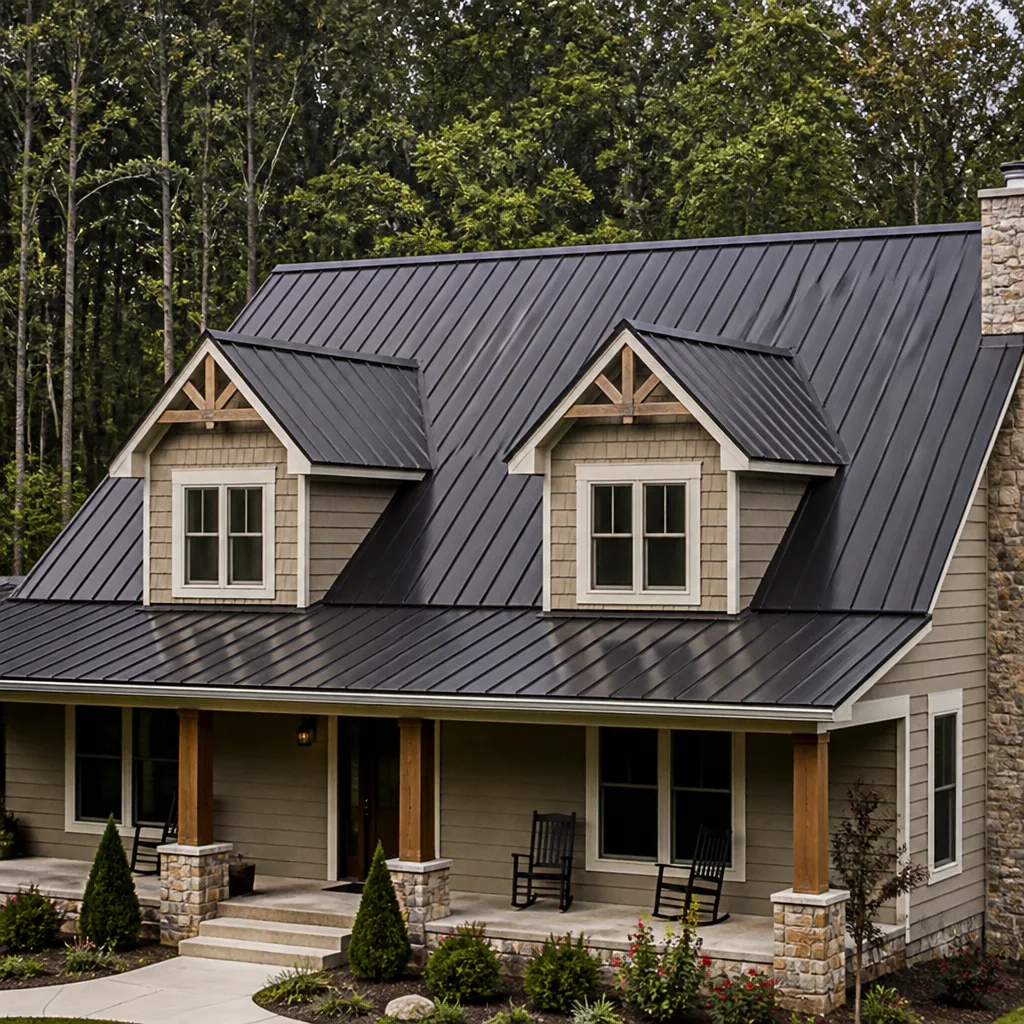 Metal roofing
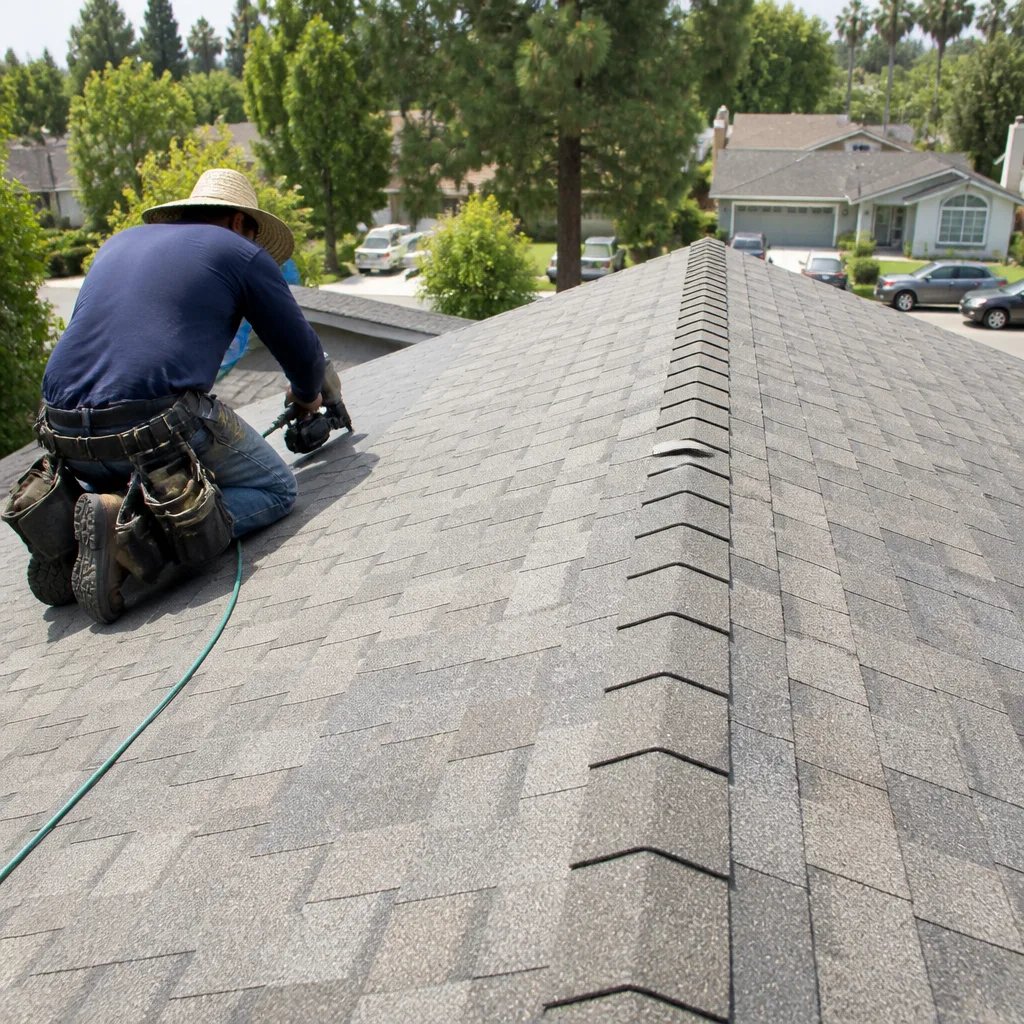
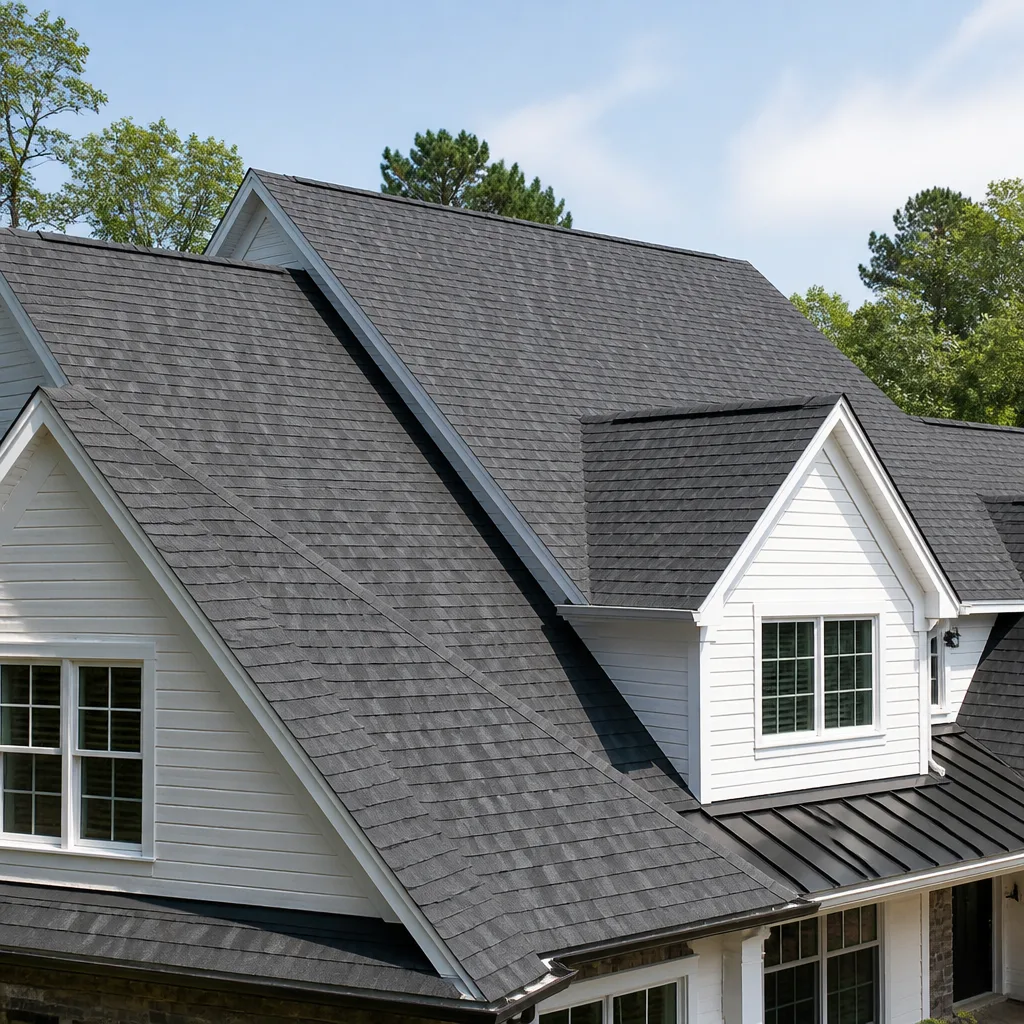 Architectural shingles
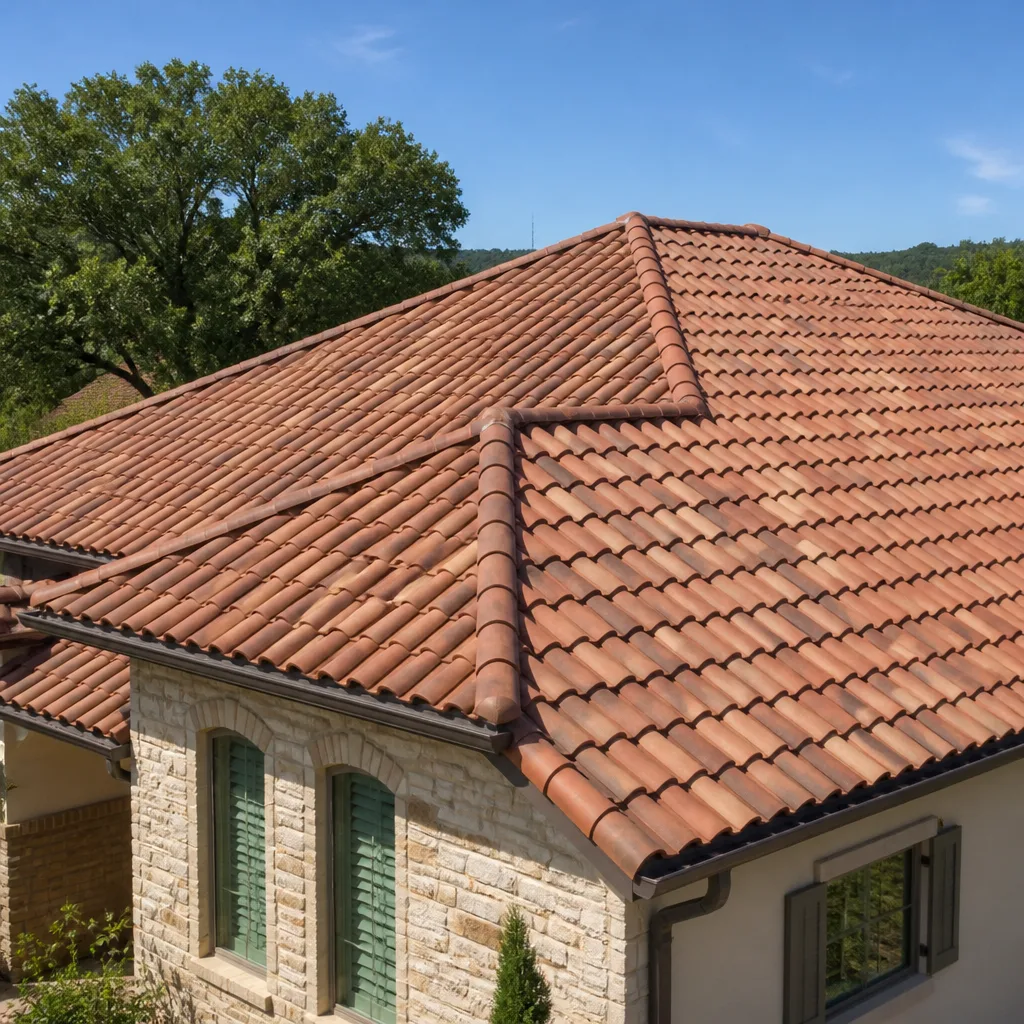 Tile roofing
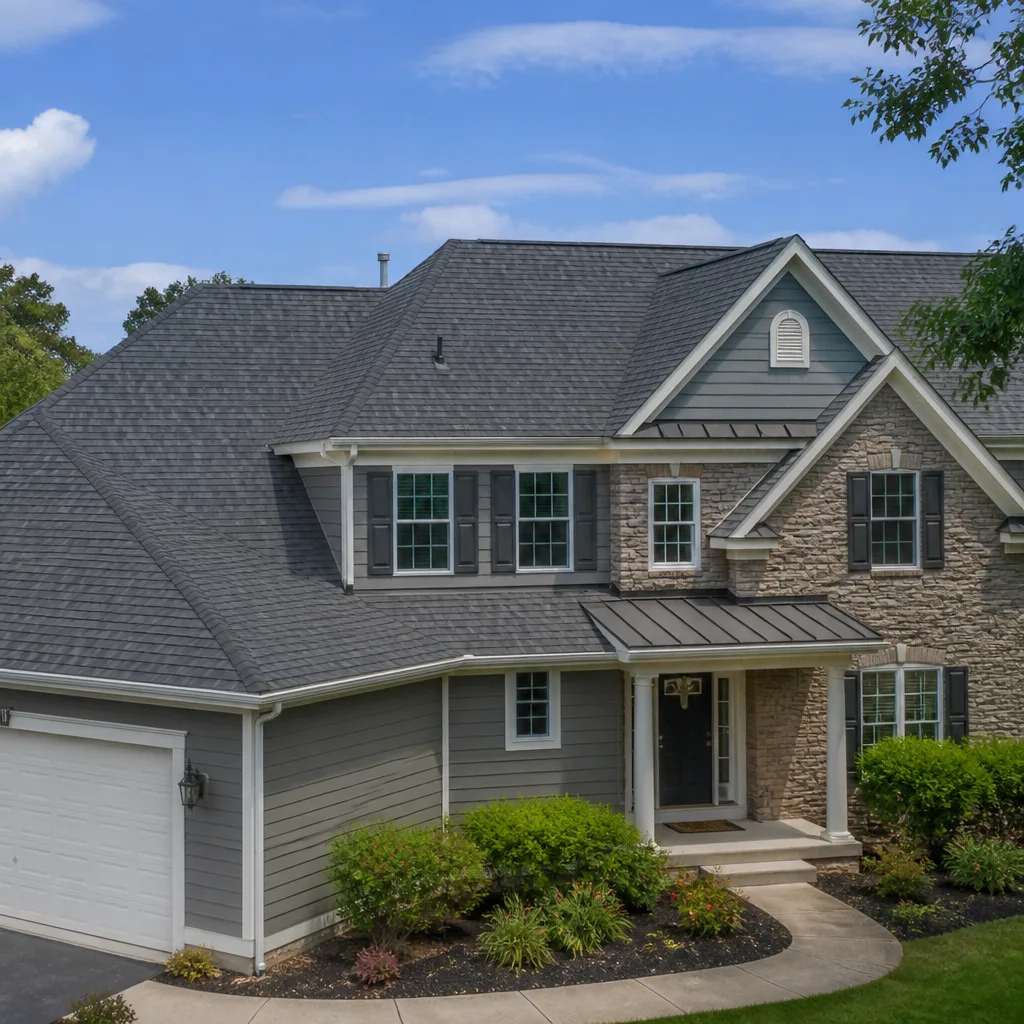 GAF
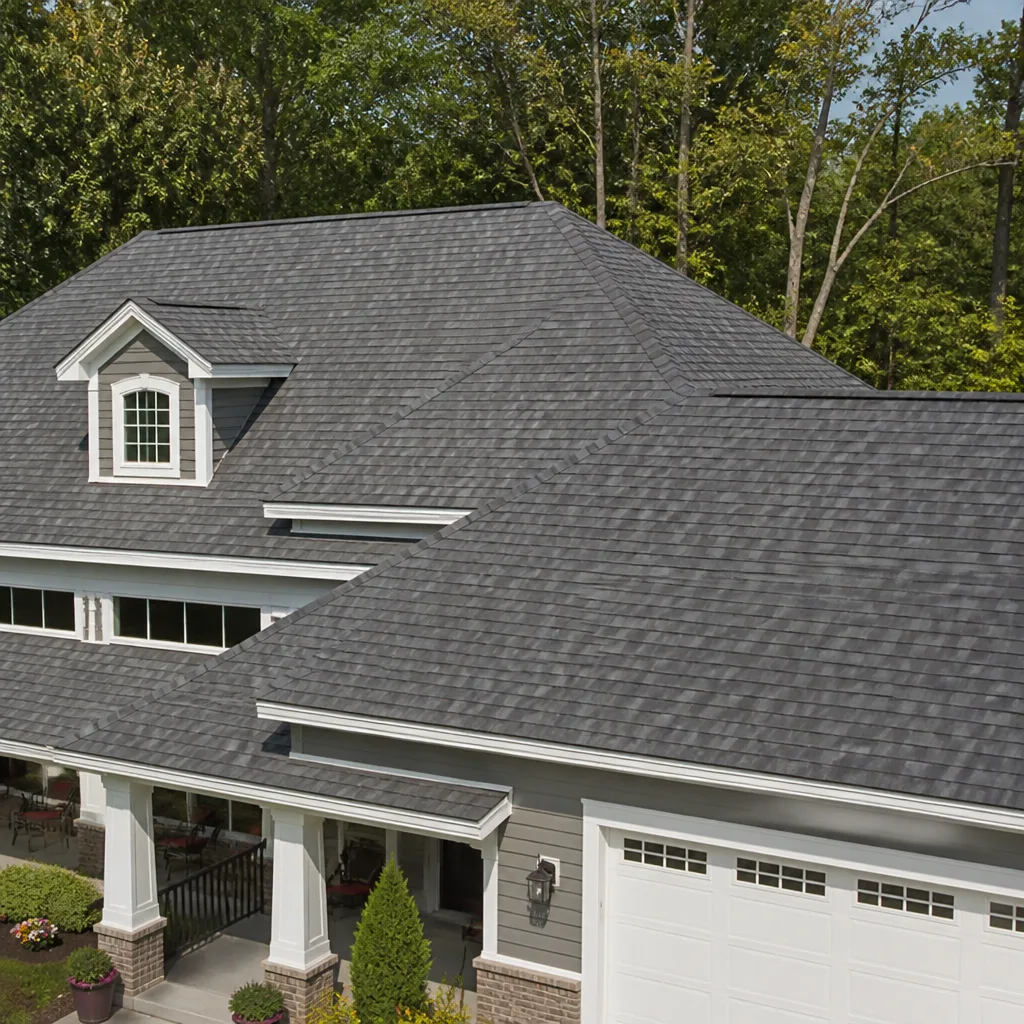 Owens Corning
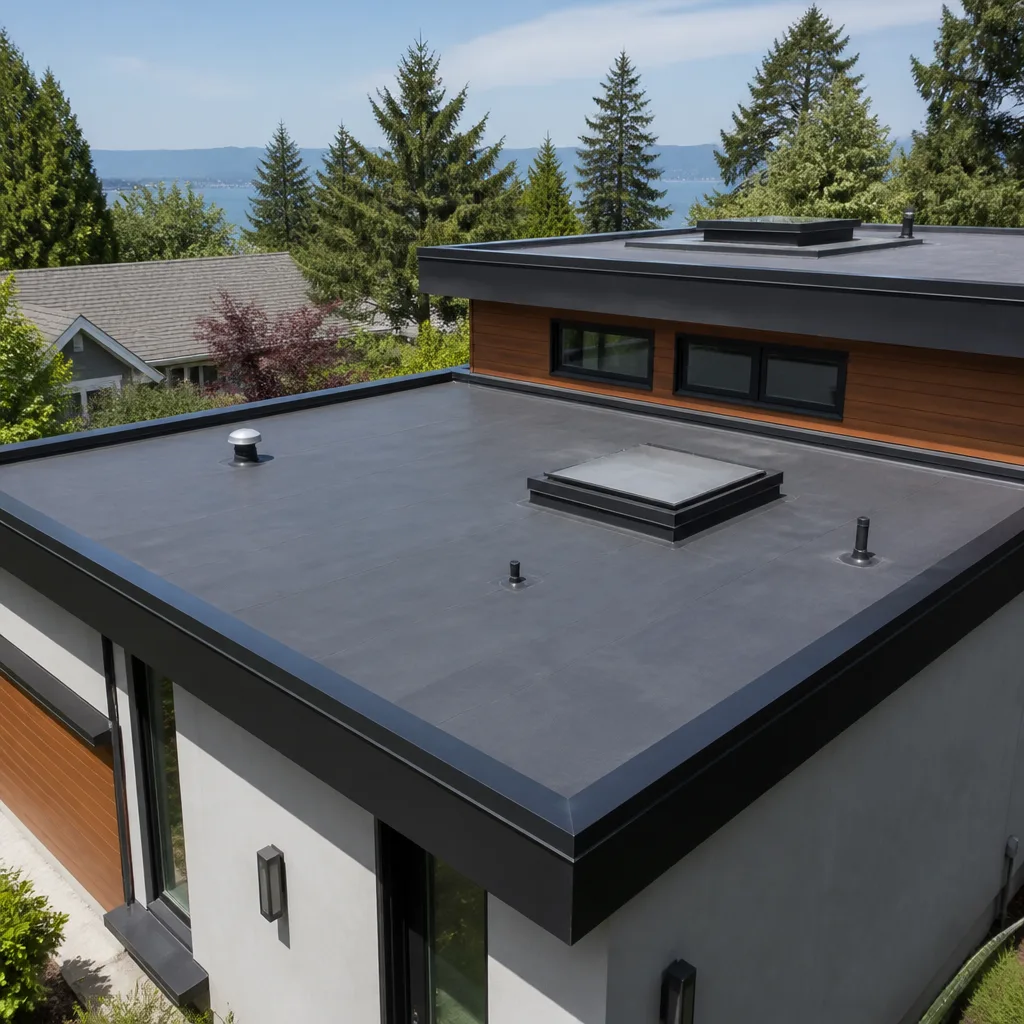 Flat & low-slope
Free roof inspection with deck photos before we talk money - GAF and Owens Corning certified installation
The Complete Guide to Roofing in Irvine
Irvine wasn’t built the way most American cities were. It was master-planned in phases, which means entire neighborhoods went up within a few years of each other, using the same materials, the same construction methods, and the same roofing systems. That concentrated building history is now producing a concentrated failure wave. Tens of thousands of Irvine roofs installed between 1970 and 2000 are reaching the end of their useful life within roughly the same decade-long window, and most homeowners won’t know their roof is failing until water is already inside the attic. This guide explains how Irvine’s unique development pattern, climate, and building codes shape every roofing decision you’ll make, from whether to repair or replace to which materials will actually hold up here. For more detail on repair decisions, see The Complete Roof Repair Guide for Irvine Homeowners.
Styles & brands we work with
Quick Answer
Roofing in Irvine is best approached by first identifying your home’s build decade and original material, because the city’s master-planned construction waves mean roofs in the same tract age and fail on similar timelines. The dominant threat here is UV degradation, not rain, which makes material selection and Title 24 cool-roof compliance the two biggest variables on any re-roofing project. A roof inspection that separates diagnosis from sales is the most reliable first step, whether you end up repairing or replacing.
Table of Contents
- Why Irvine’s Building Waves Predict Roof Failure
- UV, Not Rain: The Real Roof Killer in Irvine
- Title 24 and Cool-Roof Compliance in Irvine
- How to Find Your Roof’s True Age in Irvine
- Repair or Replace: A Decision Framework
- What Irvine’s Stucco Construction Hides From You
- Choosing Materials for an Irvine Roof
- What a Proper Roof Inspection Actually Covers
- Common Mistakes to Avoid
- When to Call a Professional
- Frequently Asked Questions
- The Bottom Line
Why Irvine’s Building Waves Predict Roof Failure
Irvine’s residential landscape is a patchwork of villages, each built out in a tight construction window. The Ranch, Woodbridge, University Park, Westpark, Northwood, Turtle Rock, and newer communities like Portola Springs and Great Park Neighborhoods each represent a distinct era of building codes, material supply chains, and contractor pools. When a tract was built in 1978, most of its homes received the same class of asphalt shingle, often from the same regional distributor, installed by crews working under the same framing conventions.
That uniformity means failure is uniform too. We see entire streets in older Northwood where the original three-tab shingles began granule-shedding within two years of each other. In Westpark’s early-1990s tracts, the concrete tile underlayment often reaches the end of its useful life in a coordinated wave. This is useful information. It means your neighbors’ roof condition is a surprisingly reliable predictor of your own.
Here’s what the build decades generally tell us about the roofing systems you’re likely to find:
- 1970-1980 (University Park, Turtle Rock, parts of Northwood): Wood shake and three-tab asphalt shingle over solid sheathing or spaced board. Wood shake requires replacement at this age. Three-tab shingles are typically 10-15 years past their service life if never replaced.
- 1980-1995 (Woodbridge, Westpark, El Camino Real, parts of Northwood): Concrete tile or dimensional asphalt shingle over plywood or OSB. Underlayment on tile roofs is the weak point now. Tile itself often has decades left, but the felt or synthetic underlayment beneath is failing.
- 1995-2010 (Oak Creek, Quail Hill, Northpark, Columbus Grove): Concrete tile and architectural asphalt shingle. These roofs are entering their first replacement cycle. Original builder-grade shingles are at end of life; tile underlayment is showing age.
- 2010-present (Portola Springs, Cypress Village, Great Park, Stonegate, Woodbury): Tile and high-grade architectural shingles installed under current code. Mostly healthy, though original installation quality varies by tract and builder.
For homeowners, the practical takeaway is simple: a roof that matches the age profile of your neighborhood is also following its failure timeline. Our Roof Inspection in Stanton service exists specifically because age-based inspection beats damage-based repair every time.
UV, Not Rain: The Real Roof Killer in Irvine
Irvine gets about 12 to 14 inches of rain per year. That’s not enough rain to be the primary threat to a roof. The primary threat is ultraviolet radiation. Irvine averages roughly 280 sunny days per year, with summer UV index values consistently reaching 8, 9, and 10, which the EPA classifies as “very high” to “extreme.” That radiation does not just heat the roof surface, it photochemically breaks down the molecular bonds in asphalt shingles, synthetic membranes, and even some coatings.
Asphalt shingles are composed of a fiberglass or organic mat, asphalt, and ceramic granules. The granules are the UV shield. When they begin to shed, the asphalt underneath is exposed and degrades rapidly. In Irvine’s UV environment, a dark asphalt shingle roof that has lost granule coverage degrades measurably faster than the same roof in a cloudier coastal climate. This is also why reflective, lighter-colored, or granule-dense shingle products perform differently here than they do in Seattle or Portland.
What this means for material selection is specific:
- Architectural shingles outperform three-tab in Irvine because their thicker, layered design holds granules longer under sustained UV exposure.
- Darker colors absorb more heat and degrade faster, but many Irvine HOAs mandate specific dark color palettes. The solution is often a cool-roof-rated shingle in the required color, which uses reflective granules to reduce heat absorption without changing the visible color.
- Concrete tile is exceptionally UV-resistant, but its underlayment is not. The tile protects the underlayment from direct sun, but ridge lines and edges where underlayment is exposed or degraded become entry points.
- Modified bitumen and single-ply membranes on flat sections require UV-stable top surfaces. An exposed base sheet on an Irvine flat roof section will crack within a few summers.
In our experience inspecting Irvine roofs, we find UV-related granule loss at the ridge line and south-facing slopes before anything else fails. That’s the roof telling you it’s reaching the back half of its life.
Title 24 and Cool-Roof Compliance in Irvine
California’s Title 24 Building Energy Efficiency Standards apply to any re-roofing project in Irvine that involves replacement of more than 50% of the roof surface. This is not optional and it is not a suggestion. It is a code requirement that narrows your material choices.
Title 24 requires that new roofing materials meet minimum solar reflectance and thermal emittance values. In practical terms, this means standard dark asphalt shingles often do not meet the prescriptive requirement without a cool-roof rating. The California Energy Commission maintains a certified roof products directory, and many manufacturers now produce Title 24-compliant versions of their standard shingle lines.
Here’s what this means for an Irvine homeowner planning a re-roof:
- If your HOA requires a specific color or material profile, you’ll need a Title 24-compliant product in that profile. Many manufacturers, including Owens Corning and IKO, produce cool-roof-rated asphalt shingles in dark colorways that meet reflectance standards while maintaining the appointment that HOAs require.
- If you’re installing concrete tile, you’re almost certainly compliant on reflectance, but the underlayment system must still meet current code requirements, which may mean upgrading from an older felt system to a synthetic underlayment.
- If you’re doing a repair rather than a re-roof, Title 24 may not trigger unless the repair exceeds the 50% threshold. A repair that patches a small section does not require cool-roof compliance.
- If your roof is on a historic or designated property, there may be exemptions or alternative compliance pathways, but these are rare in Irvine’s planned communities.
- Visit the Irvine city building division’s online permit portal. You’ll need your address, and in some cases, the parcel number from your property tax statement.
- Search for your address and pull all historical permits. Look specifically for a “re-roof” permit, which is required in Irvine for any roof replacement. The permit record will typically include the date, the contractor, and sometimes the material type.
- If the permit identifies the material, note it. For example, a 1998 permit may specify “heavier class fiberglass shingle” or “concrete tile over 1/2 inch plywood.” This tells you what kind of roof you have and how old it is.
- If you find no re-roof permit, assume the roof is original to the home. Look up your home’s build year. If it’s 1988 and there’s no permit, you have a 38-year-old roof, and it’s time for an assessment.
- Age of the roof. If an asphalt shingle roof is 20+ years old and has significant granule loss, repairs become stopgap measures. You’ll spend $800 here and $1,200 there over the next three years, then replace it anyway. The math favors replacement.
- Extent of the damage. A single damaged shingle from a fallen branch is a repair. Wind damage across three roof slopes is a replacement-level event, especially if the shingles are discontinued or the underlayment is compromised.
- Leak location and recurrence. A first-time leak that traces to a clear, localized cause (a cracked pipe boot, a damaged valley) is repairable. A leak that has recurred, or that appears in multiple locations, indicates systemic failure.
- Underlayment condition. For tile roofs, the tile often looks fine while the underlayment underneath is failing. If we lift tile and find cracked felt or deteriorated synthetic underlayment in multiple test areas, repair is not responsible. The roof needs a lift-and-replace, which is a re-roof by another name.
- HOA and code requirements. In rare cases, a repair may trigger compliance issues that make partial work impractical. If your Irvine HOA requires a uniform appearance and the replacement shingles won’t match, the decision may be made for you.
- Asphalt architectural shingles: The most common choice for re-roofing in Irvine’s non-HOA neighborhoods and for HOAs that allow shingle roofs. Look for cool-roof-rated products from Owens Corning or IKO if you need a darker color under HOA rules. The dimensional profile holds granules longer in UV exposure than three-tab.
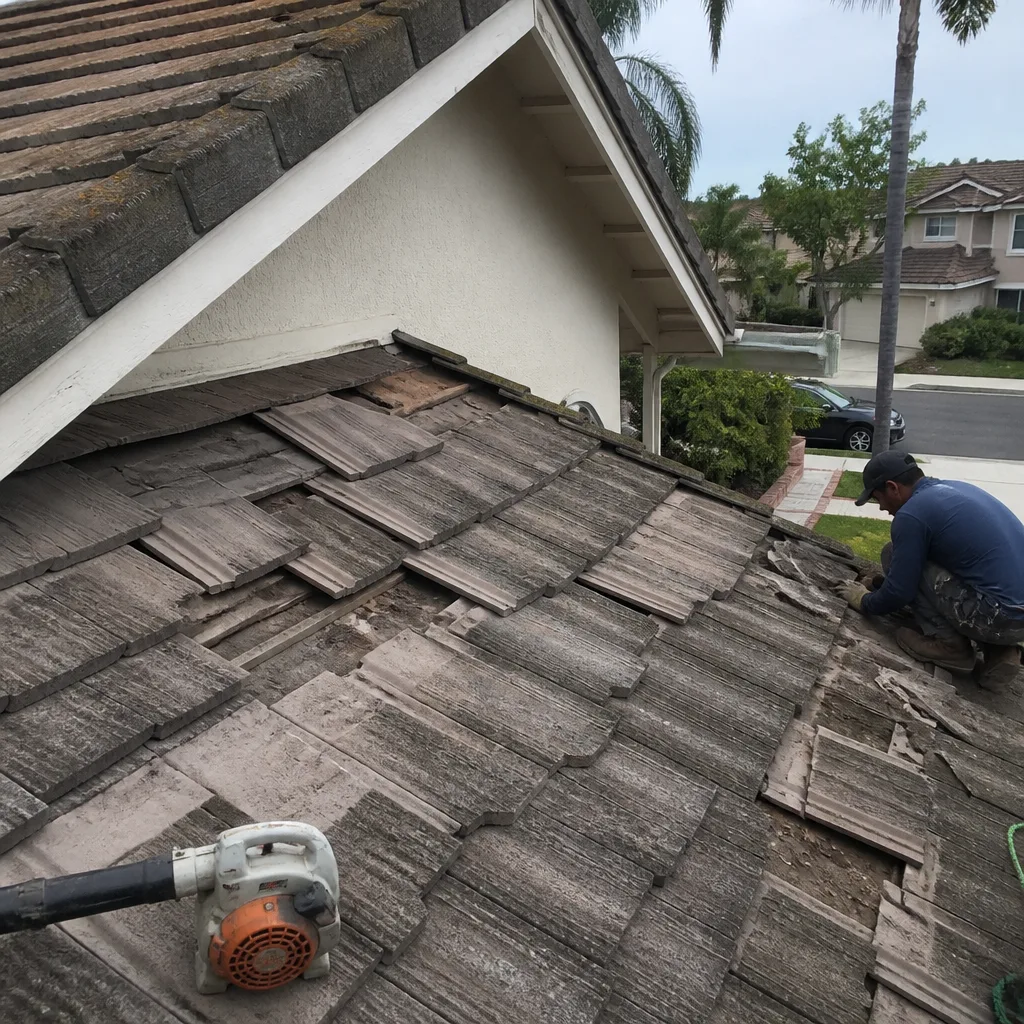
- Concrete tile: The dominant original material on Irvine homes from the 1980s through the 2000s. Tile itself routinely lasts 50 years or more in Irvine’s climate, but the underlayment beneath it does not. A tile roof at year 25 needs an underlayment assessment even if the tile is pristine.
- Composite and synthetic tile: Lighter than concrete, available in a wide range of profiles, and increasingly specified in newer Irvine villages. Atlas and Tamko both produce composite options that meet Title 24 reflectance standards.
- Flat roof membranes: Many Irvine homes have flat sections, particularly over garages, patios, and additions. These sections require specialized membranes and detailing. They fail faster than sloped sections in UV exposure, so they need inspection more frequently.
- Surface evaluation: We walk the roof (where safe and accessible) and assess granule loss, curling, cracking, wind damage, impact damage, and general wear patterns. On tile roofs, we look for cracked, slipped, or missing tile and assess the condition of exposed underlayment.
- Flashing and penetration inspection: Flashings at chimneys, skylights, vents, pipes, valleys, and wall intersections are the most common failure points on any roof. We check each one for gaps, corrosion, or poor sealing.
- Eave and drip edge evaluation: In Irvine’s stucco-heavy construction, this is where hidden rot lives. We check the drip edge for proper extension and look for signs of water intrusion at the fascia line.
- Attic inspection: From inside, we look at the underside of the sheathing for water stains, mold, or daylight penetration. We check ventilation (intake and exhaust) and insulation condition.
- Underlayment sampling (tile roofs): On tile roofs, we may lift a few tiles at representative locations to assess underlayment condition directly. This is the only way to know if a tile roof needs underlayment replacement before it leaks.
- Documentation: You get a written report with photos and specific findings, including a prioritized list of what needs attention now, what can wait, and what the expected timeline is for major work.
- Trusting the seller’s disclosure on roof age. Disclosures are often based on the previous owner’s best guess, not permit records. Always verify through Irvine’s permit database before making decisions.
- Ignoring the HOA’s material requirements until after you’ve chosen a product. Irvine has some of the most restrictive HOAs in Orange County. A shingle you love may be disallowed. Check the CC&Rs first.
- Choosing the darkest shingle available because it looks good. In Irvine’s UV environment, dark non-reflective shingles absorb heat and degrade faster. If you need a dark look, choose a cool-roof product that meets Title 24 reflectance standards.
- Repairing a tile roof without checking the underlayment. The tile is rarely the problem. The underlayment underneath is. A repair that addresses only visible tile damage may leave the actual failure untouched.
- Assuming a leak is a roofing problem only. In Irvine’s stucco homes, leaks at the wall-roof intersection can be caused by failed flashings, cracked stucco, or plumbing penetrations. Diagnose before you repair.
- Deferring inspection because the roof “looks fine from the ground.” From the ground, a failing roof looks like a roof. The damage is on top and underneath, not visible from the curb.
The practical effect is that when we evaluate an Irvine roof for replacement, we start with Title 24 compliance as a filter, then narrow to HOA requirements, then to homeowner preference. That’s the correct order, and it’s the order most homeowners get backwards. Atlas and Tamko both maintain certified product lists that include Irvine-appropriate options.
How to Find Your Roof’s True Age in Irvine
Most homeowners in Irvine have a vague sense of their roof’s age based on when they bought the home. That’s unreliable. A home built in 1993 may have been re-roofed in 2012, or it may still have the original roof. The difference matters enormously to your planning timeline and budget.
Irvine’s building permit database is public and searchable, and it is the single most useful tool a homeowner has for confirming roof age. Here’s the process we recommend:
There’s a second, less precise method: look at the permit history of neighboring homes. If three houses on your street all pulled re-roof permits in 2015, and yours didn’t, odds are you have an original roof surrounded by replacements. This pattern is extremely common in Irvine’s 1970s and 1980s tracts.
When we inspect a roof and the homeowner believes it’s 12 years old but the granule wear pattern says 22, that’s usually because the seller’s disclosure was vague or the roof was partially replaced. The permit record is the closest thing to ground truth. Gable Roof Repair offers Roof Repair in Stanton and throughout the region based on what inspection actually reveals, not what a listing said.
Repair or Replace: A Decision Framework
Most roofing companies have an incentive to recommend replacement. A full replacement is a bigger job, a bigger check, and a simpler day for the crew. Our position is different, and it’s baked into the company name. Gable Roof Repair was built on a repair-first philosophy. The question we ask is not “how do we sell a new roof” but “what does this roof actually need.”
That said, repair is not always the right answer. Here’s the framework we use, and that you can use yourself before picking up the phone:
The honest recommendation is one we make every week: repair when it makes sense, replace when it’s right. Both are services we perform, and neither is a sales pitch.
What Irvine’s Stucco Construction Hides From You
Irvine’s residential architecture is dominated by stucco exterior walls. Stucco is durable and fits the Mediterranean and Spanish-influenced design language of the city’s villages. But it has a specific weakness when it comes to roofing: it conceals fascia boards.
On a traditional home with exposed wood fascia, rot is visible from the ground or from a ladder. You can see it. On an Irvine stucco home, the fascia is often enclosed or partially enclosed, with stucco running to the roofline and the gutter system masking what’s underneath. When a roof leak develops at the eave line, water runs down behind the stucco and sits against the fascia and rafter tails. By the time the problem becomes visible, it’s often structural.
We’ve opened Irvine eaves on 1980s homes in Woodbridge where the fascia was completely deteriorated under a perfectly intact-looking stucco face. The leak had been active for years, but the stucco acted as a shell, holding everything together visually.
This is why a roof inspection in Irvine must extend beyond the shingles or tile to the eave line, the drip edge, and the flashings at intersections. When a homeowner calls us for what they think is a simple roof repair, and we recommend pulling a section of stucco to assess the fascia, that’s not scope creep. That’s the only way to know what’s actually happening underneath.
There’s also a difference between a cosmetic re-roof and a structural assessment. A cosmetic re-roof addresses the surface: new shingles or tile over existing sheathing. A structural assessment digs into what’s underneath: the sheathing, the fascia, the rafter tails, the ventilation. Irvine’s climate, with its dry summers and periodic heavy rains, is hard on the interface between roof and wall. Flashings fail, water wicks laterally, and the stucco hides the evidence.
Choosing Materials for an Irvine Roof
Irvine homeowners enjoy something most of the country doesn’t: a genuine choice among multiple material types, driven by a market that has supported both tile and shingle roofing for decades. The materials you choose should reflect your home’s architecture, your HOA’s requirements, and what the Irvine climate actually demands.
We work with seven major shingle manufacturers: GAF, CertainTeed, Owens Corning, IKO, Atlas, Tamko, and Boral. That’s not a marketing bullet point. It’s an installation discipline. Each manufacturer has different product specifications, installation requirements, nail patterns, and warranty terms. A crew that only installs one brand will recommend that brand regardless of whether it fits your roof. Our crews know the differences, and we match material to application.
Here’s how we think about materials for Irvine specifically:
The brand question comes up constantly: “Which shingle brand is best?” The honest answer is that the best shingle is the one installed correctly, on a properly prepared deck, with correct underlayment and ventilation. Seven brands, one standard of installation. The installation is the variable that determines whether the roof reaches its rated life.
What a Proper Roof Inspection Actually Covers
We offer roof inspection as a standalone service, which means you can hire us to assess your roof without any obligation to use us for repairs or replacement. That separation of diagnosis from sales is deliberate. It’s the only way an inspection can be honest.
A proper inspection in Irvine covers these areas, in this order:
The cost of an inspection is small compared to the cost of discovering a roof failure through a leak into your living room. Your roof’s job is to protect everything underneath it, and an inspection tells you whether it still can. We also offer Roof Replacement in Stanton when inspection reveals that replacement is the right call.
Common Mistakes to Avoid
When to Call a Professional
Call us when you see granule accumulation in your gutters or downspouts, which means your shingles are actively shedding their UV shield. Call when you find water stains on your ceiling or walls, even if they’re dry, because the leak may not be active but the damage has already happened. Call when your roof is 20 years old and has never been inspected by someone who wasn’t trying to sell you a roof. Call when you’re buying or selling an Irvine home and are relying on a roof disclosure that may be inaccurate. Call when the last roof work on your home was done by a contractor whose name you can’t remember. Gable Roof Repair offers free estimates in Irvine. Call (866) 650-8319 and we’ll send someone out to look at what’s actually happening on your roof.
Frequently Asked Questions
A full asphalt shingle re-roof on a typical Irvine single-family home typically runs between $12,000 and $22,000, depending on square footage, tear-off requirements, and material grade. Concrete tile re-roofing, including underlayment replacement, typically runs $18,000 to $35,000 or more. These are Irvine-specific ranges reflecting local labor rates, Title 24 compliance, and HOA-driven material requirements. For an exact quote on your home, call (866) 650-8319 to schedule a free estimate.
Yes. Irvine requires a re-roof permit for any roof replacement, and the permit is recorded in the city’s building database. Permits trigger inspection requirements and code compliance, including Title 24 cool-roof standards. A contractor who suggests skipping the permit is not doing you a favor.
In Irvine’s UV environment, architectural asphalt shingles typically last 18 to 25 years, while three-tab shingles last 15 to 20 years. These ranges are shorter than national averages because of sustained sun exposure and heat. Granule loss is the leading indicator of remaining life. For an assessment of your specific roof, call (866) 650-8319.
If the roof is under 15 years old and the damage is localized (a damaged shingle, a cracked boot, a minor flashing gap), repair is usually appropriate. If the roof is 20+ years old with widespread granule loss or multiple leak points, repair becomes a temporary patch. We’ll tell you which one your roof actually needs.
Title 24 compliant shingles use reflective granules or coatings to meet California’s minimum solar reflectance standards, reducing heat absorption and energy costs. They look nearly identical to non-compliant versions but are rated through the California Energy Commission’s certified products directory. For Irvine re-roofs, compliance is a code requirement, not an upsell.
Search Irvine’s public permit database for your address and look for a re-roof permit. If no re-roof permit exists, your roof is original to the home’s construction date. This is the most reliable method for establishing roof age in Irvine, where neighborhoods were built in coordinated waves. For more guides & resources on Irvine roofing, explore our blog.
The Bottom Line
Irvine’s roofing challenges are predictable, which means they’re also manageable with the right information. Your home’s build decade tells you what materials were likely installed and when they’ll likely fail. Irvine’s UV-dominant climate tells you to prioritize granule density and reflective ratings over rain-related concerns. Title 24 tells you which products are actually compliant. And the permit database tells you the true age of your roof. Combined, these factors give you a decision framework that most homeowners never have. The next step is an inspection that tells you where your roof actually stands. That’s what we do. Call (866) 650-8319 to schedule yours.
Written by the team at Gable Roof Repair, serving Irvine since 2016.
See the difference
 Before
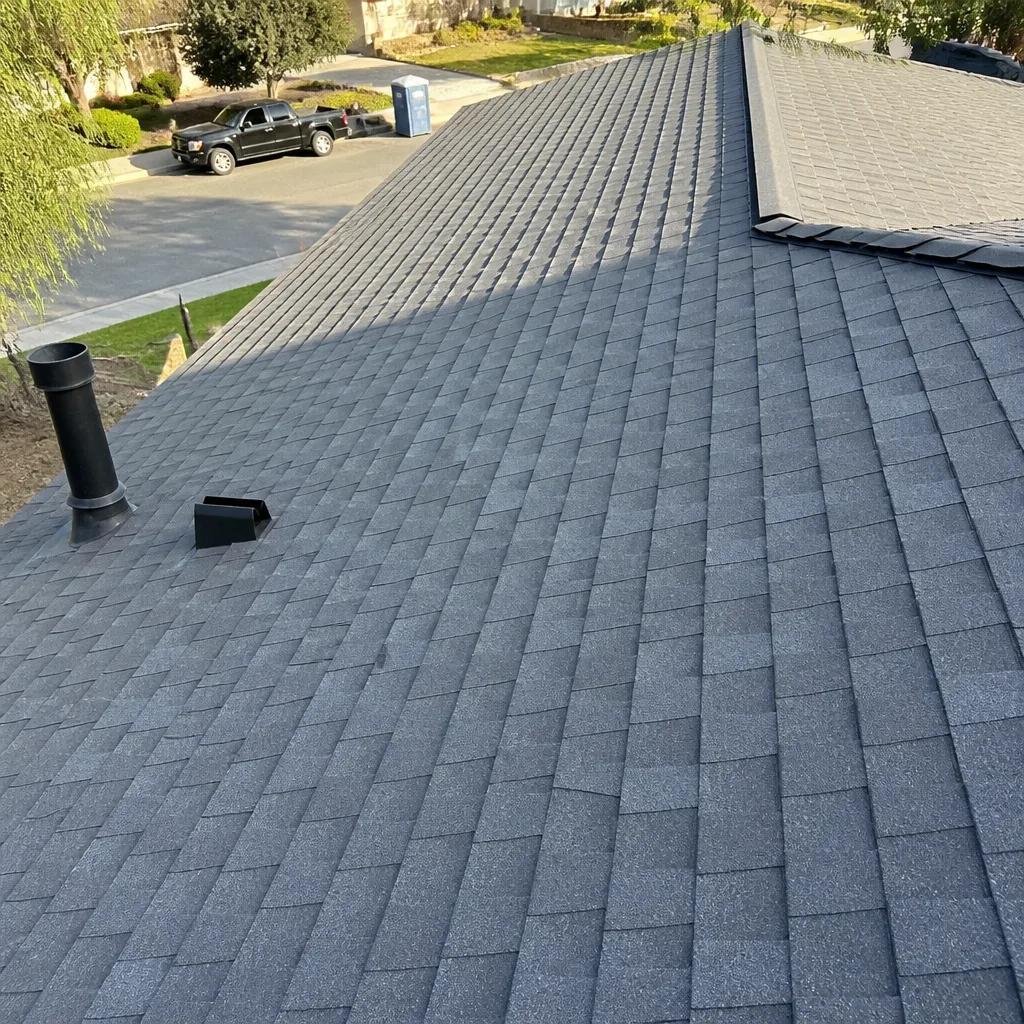 After
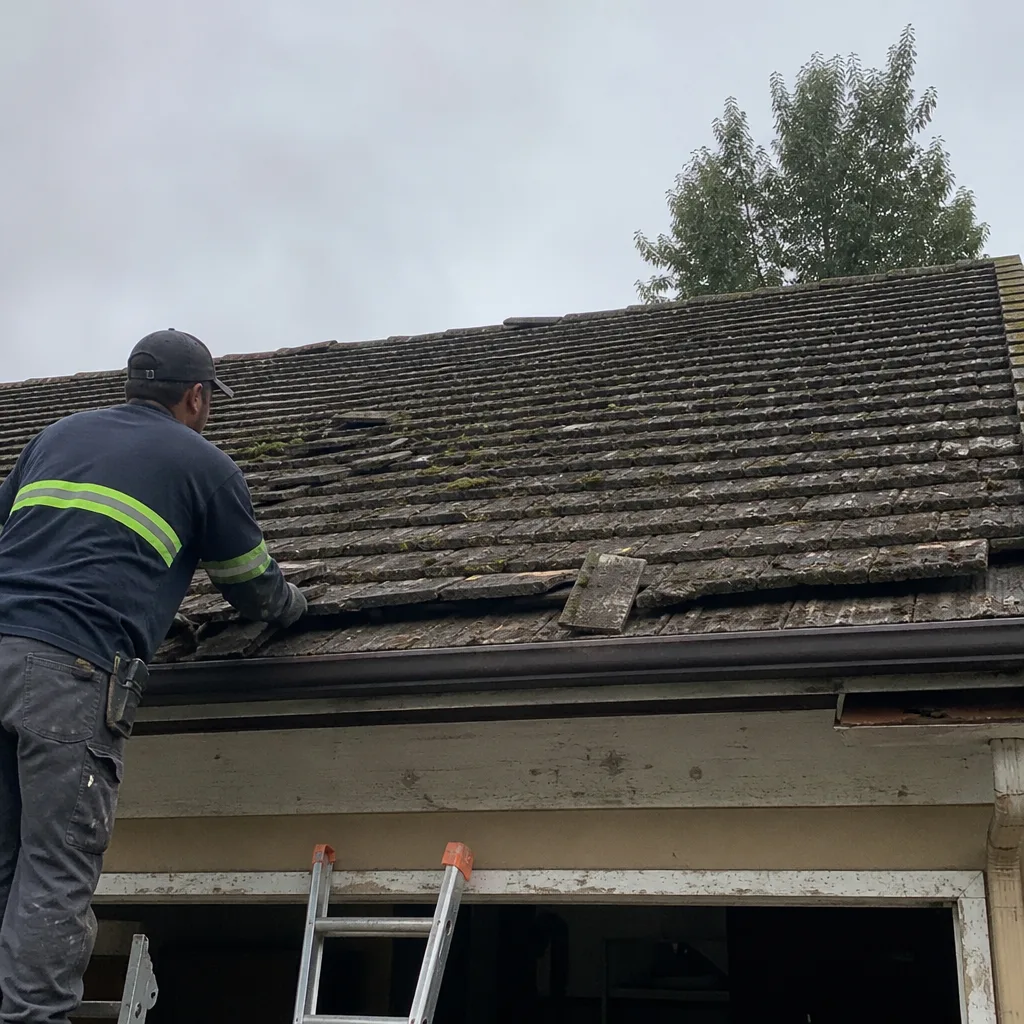 Before
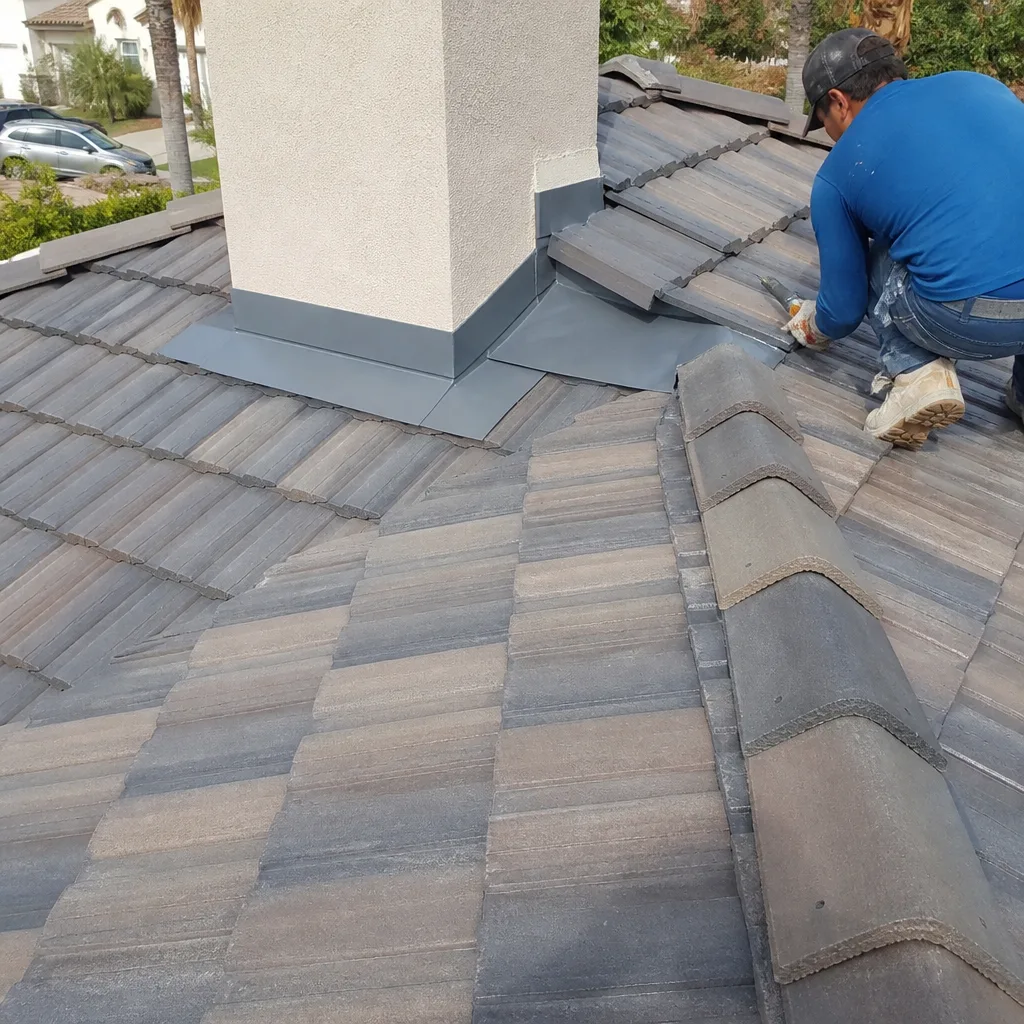 After
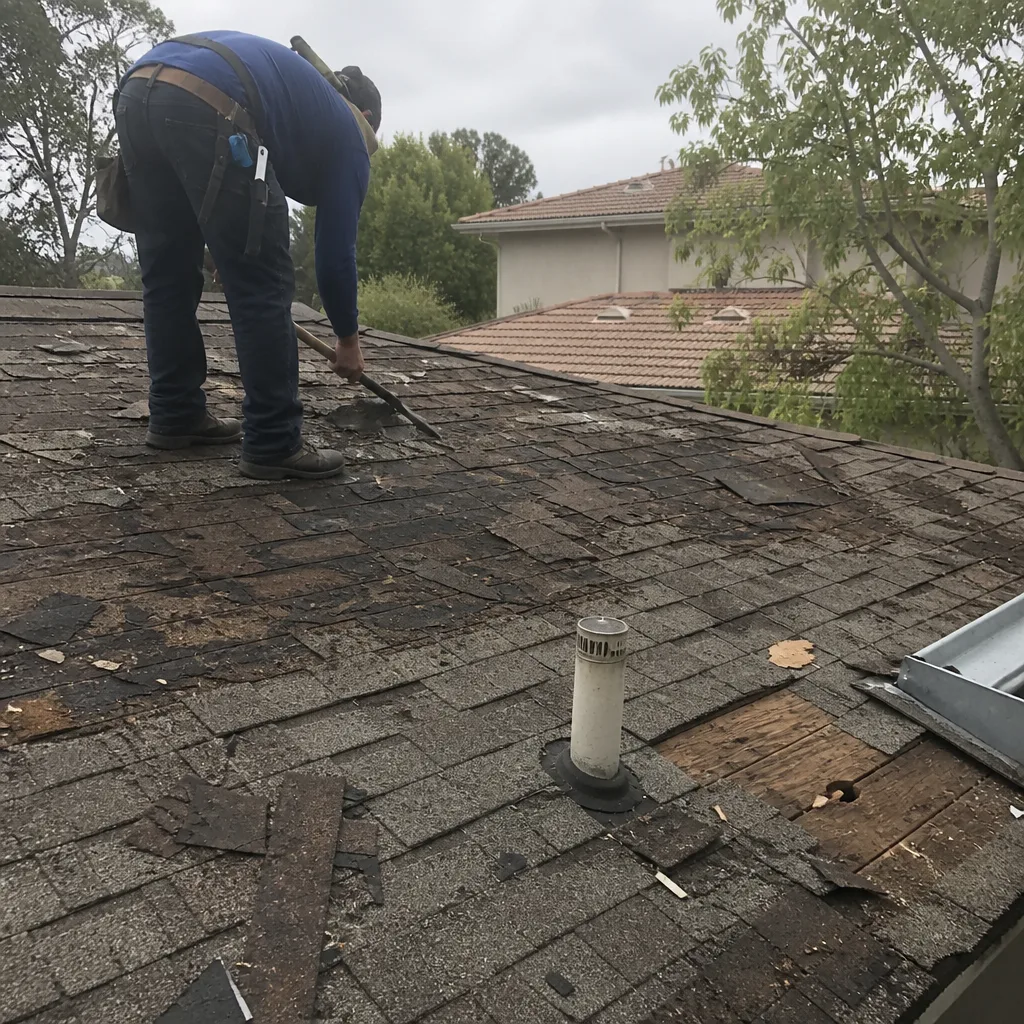 Before
 After