Last updated October 30, 2026
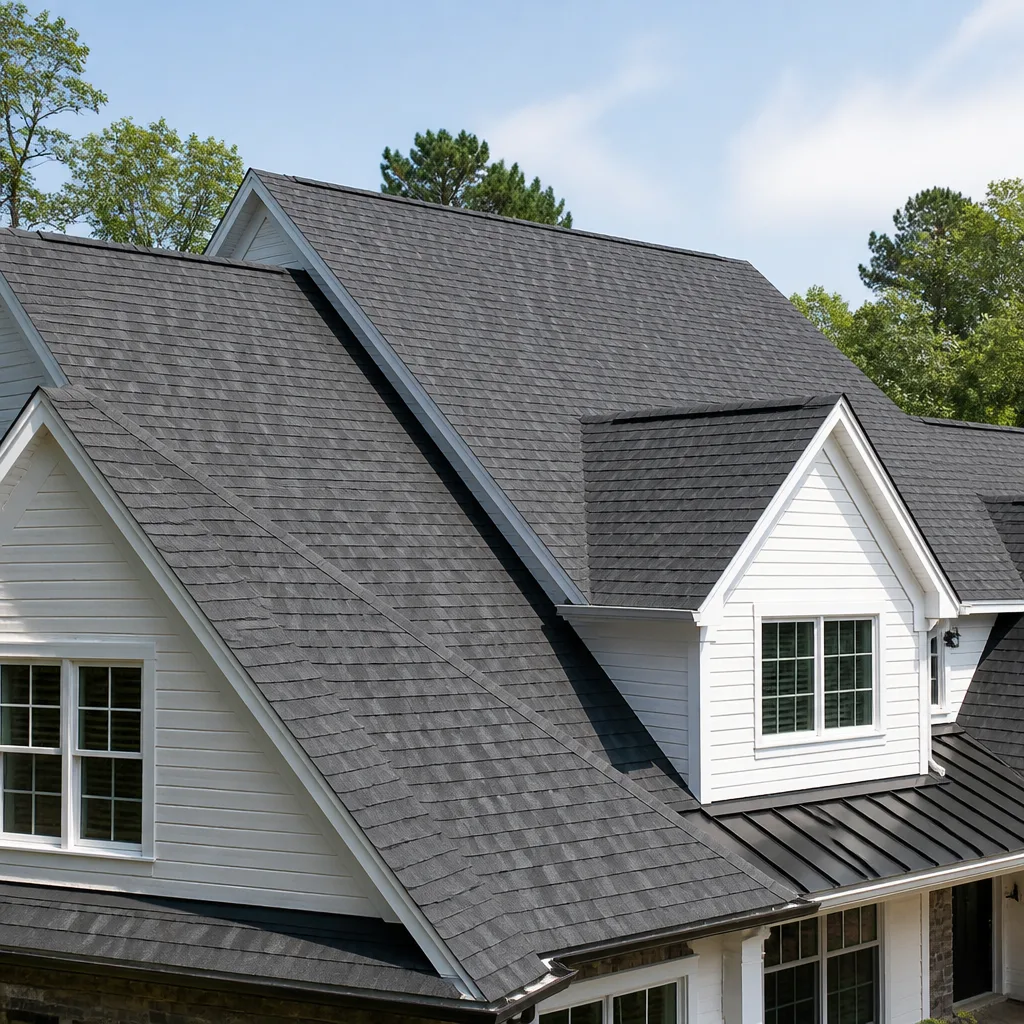 Architectural shingles
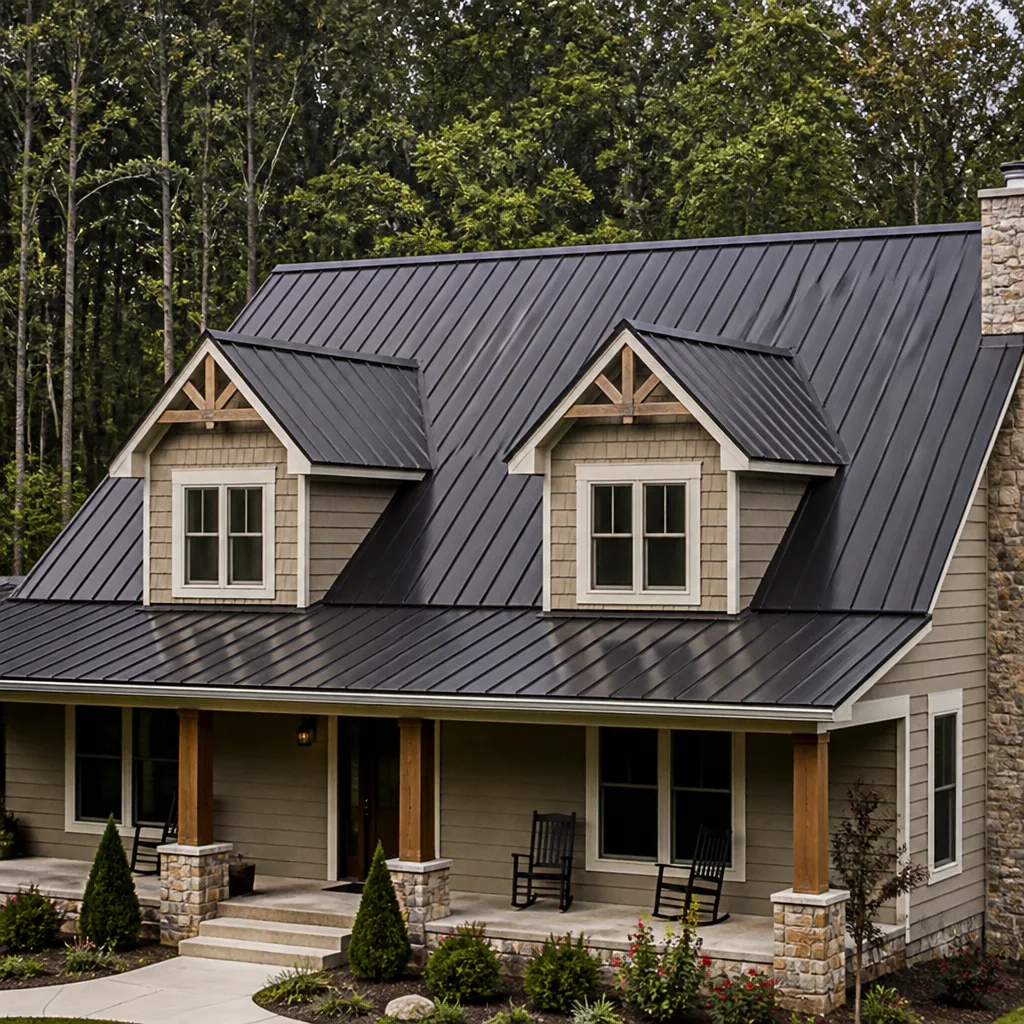 Metal roofing
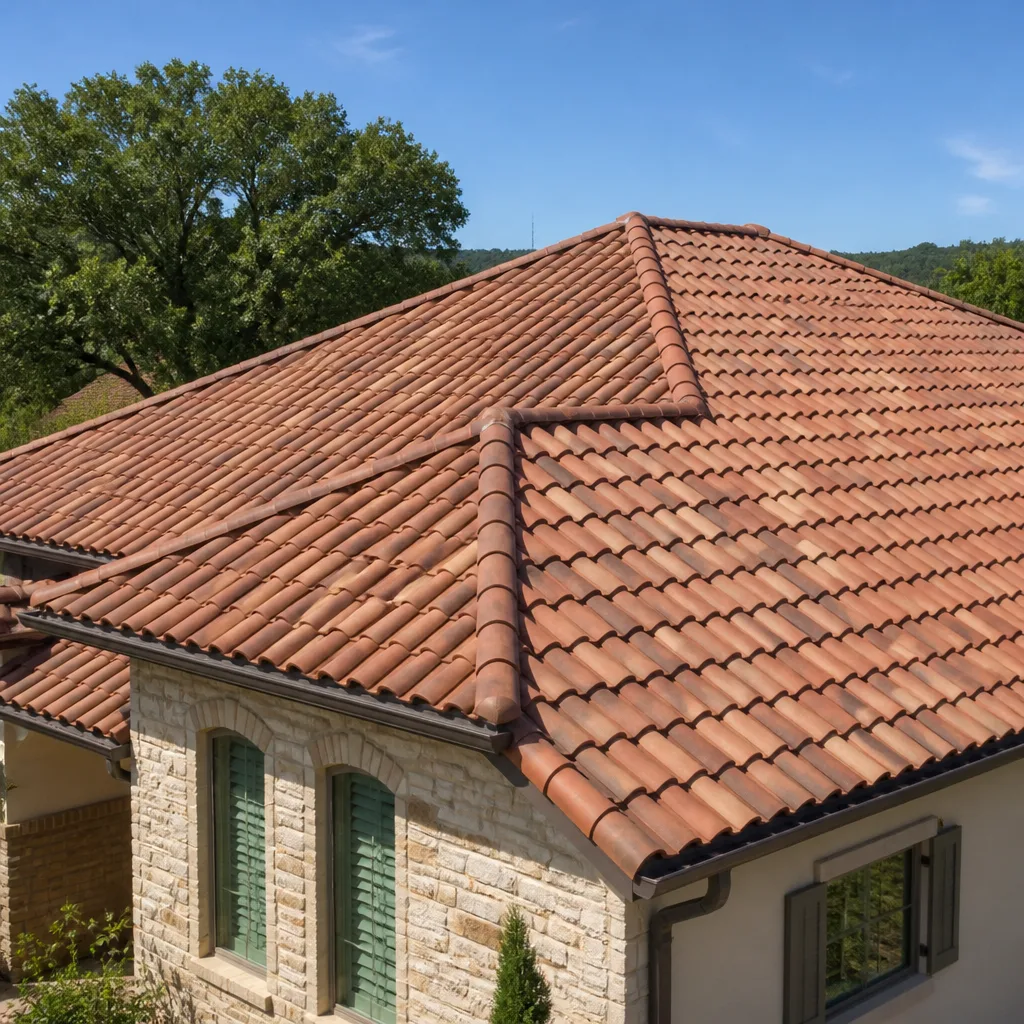 Tile roofing
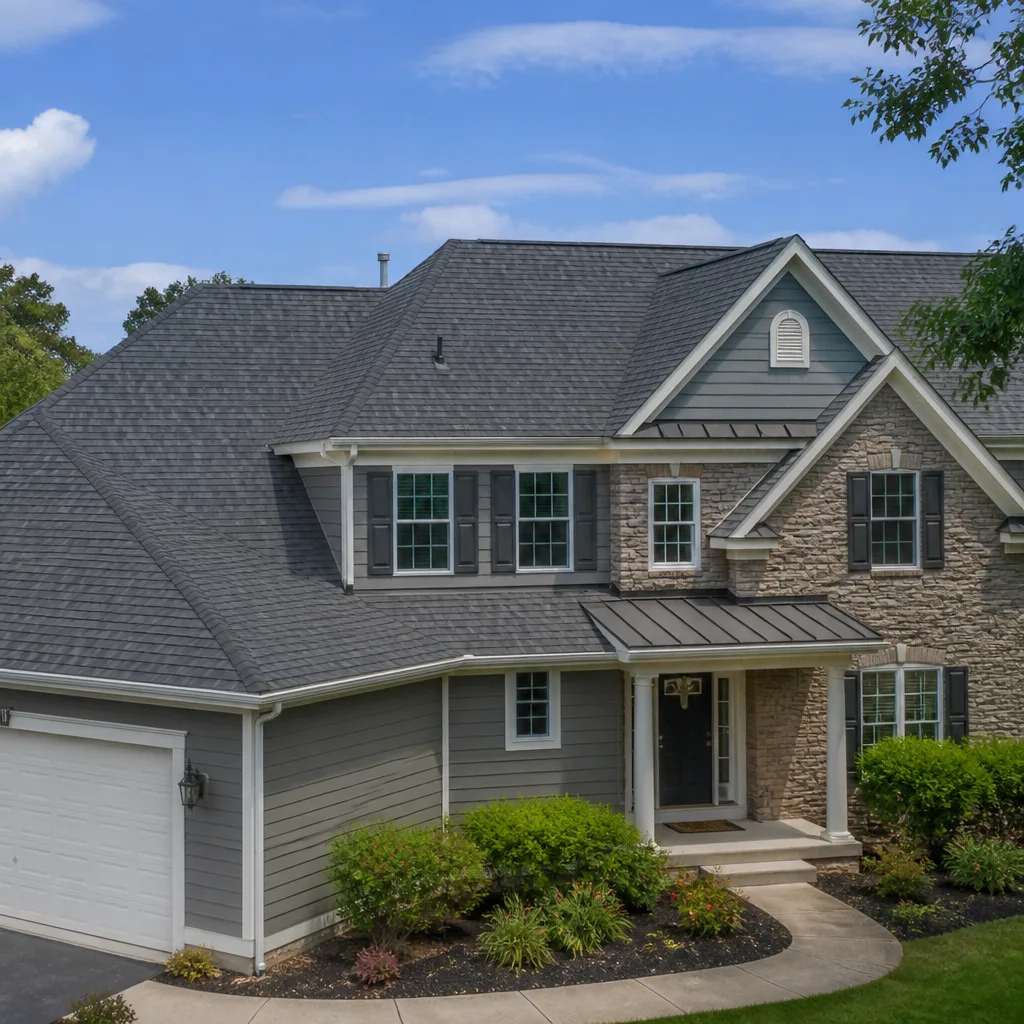 GAF
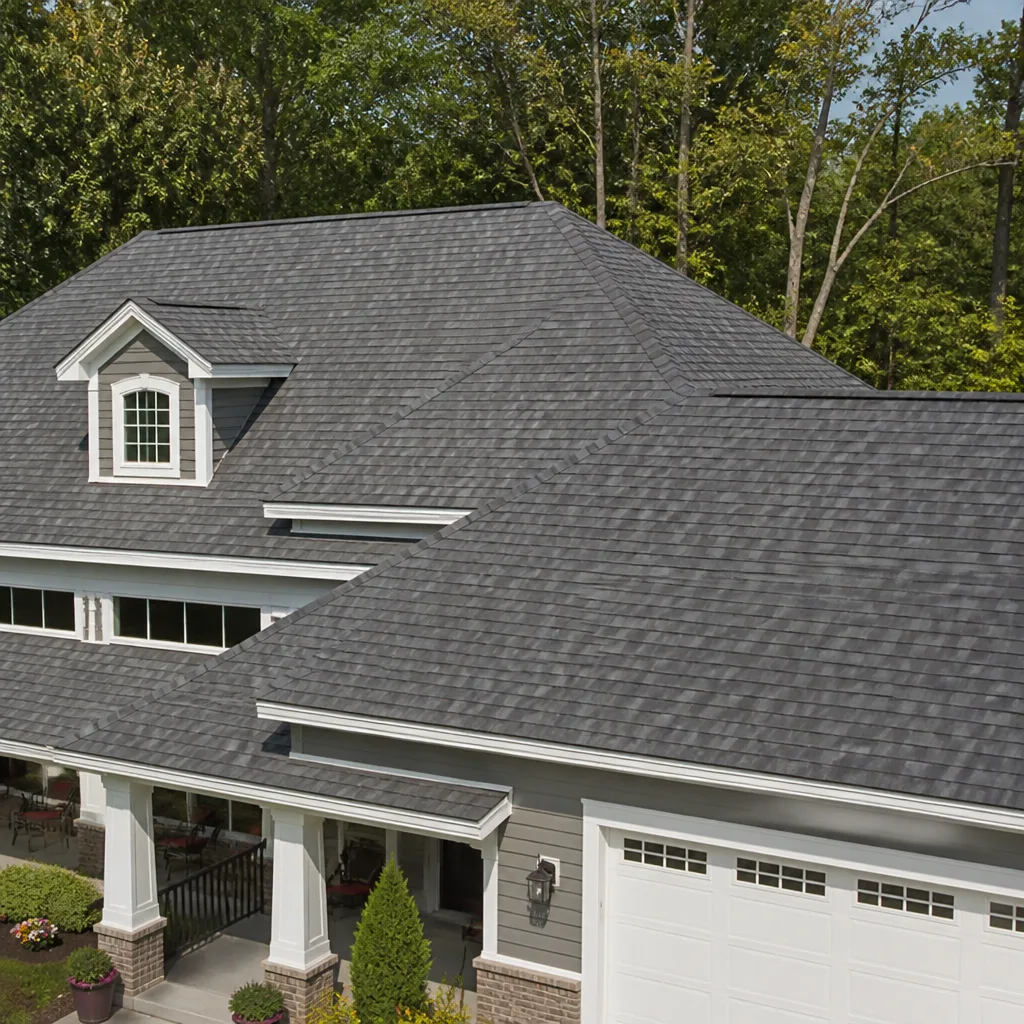 Owens Corning
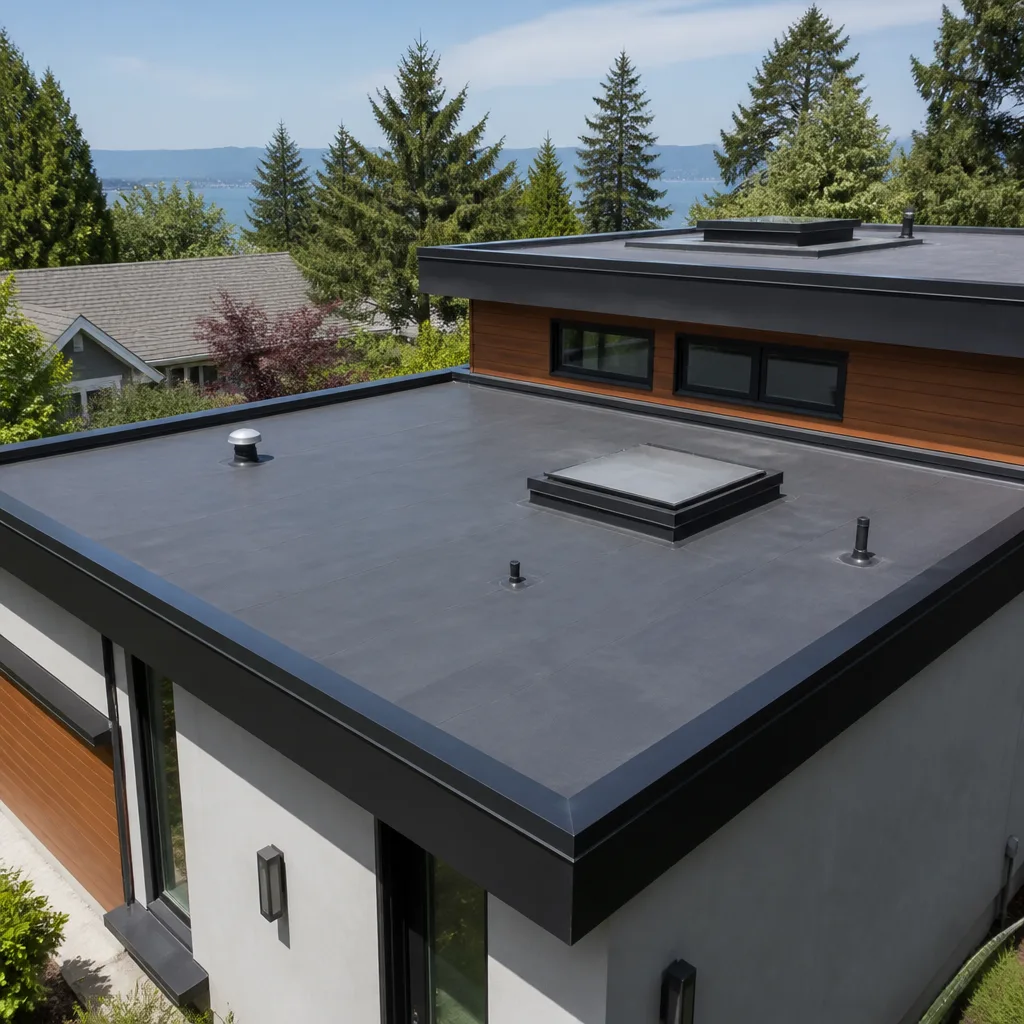 Flat & low-slope
Free roof inspection with deck photos before we talk money - GAF and Owens Corning certified installation
The Complete Roof Repair Guide for Irvine Homeowners
Most our Roof Repair services guides were written for the Midwest. They obsess over ice dams, hail dents, and snow load, none of which matter much in Irvine. What actually destroys roofs here is a combination that sounds almost gentle until you do the math: 280+ days of direct ultraviolet exposure every year, periodic Santa Ana winds hitting 60 mph, and a marine layer that keeps mornings damp just long enough for materials to swell and shrink on a daily cycle. This guide maps every repair decision to those local conditions, because a roof fixed without them in mind will quietly fail again inside three years. You’ll learn how Irvine roofs actually deteriorate, what repairs cost, which ones matter first, and how to avoid paying for work that doesn’t address the real problem.
Quick Answer
Roof repair in Irvine typically costs $350 to $1,400 for localized fixes like cracked tiles, failed pipe boots, or lifted shingle edges, while larger perimeter or underlayment work can reach $3,000 to $6,000. The most common preventable failures in Irvine are UV-dried underlayment beneath concrete tile, wind-uplifted ridge and rake edges from Santa Ana gusts, and transition leaks where tile roofs meet flat TPO sections. Because Irvine’s damage patterns are climate-specific, a useful repair plan starts with a standalone inspection that identifies which failure mode is actually active before any product or price is discussed. Roof Inspection in Stanton covers the same diagnostic approach we apply across Orange County.
Styles & brands we work with
Table of Contents
- How UV Radiation Actually Breaks Down Irvine Roofs
- Santa Ana Wind Uplift: Which Edges Fail First and Why
- The Three Materials That Dominate Irvine Roofing (and Their Real Timelines)
- The Counterintuitive Failure: Dried-Out Underlayment Cracks Before Shingles Show Wear
- How to Stage Repairs by Zone So Every Dollar Hits the Highest-Probability Leak First
- Irvine Building Permit Thresholds: Repair vs. Replacement and How to Document Work
- What Roof Repair Actually Costs in Irvine: Line-Item Pricing by Repair Type
- Common Mistakes to Avoid
How UV Radiation Actually Breaks Down Irvine Roofs
Ultraviolet light is not a surface nuisance. It’s a chemical engine. Photons strip the molecular bonds in roofing materials, leaching out the plasticizers and oils that keep asphalt shingles flexible, concrete tile sealed, and TPO membrane weldable. In Irvine, with one of the highest annual solar exposure counts in coastal California, that process runs roughly twice as fast as it does in Seattle or Portland. A 30-year architectural shingle in Irvine behaves more like a 17 to 20-year product, not because the shingle is defective but because the UV dose is relentless. We see the same granule loss on a 12-year-old Irvine shingle roof that Midwestern contractors associate with a 25-year-old roof.
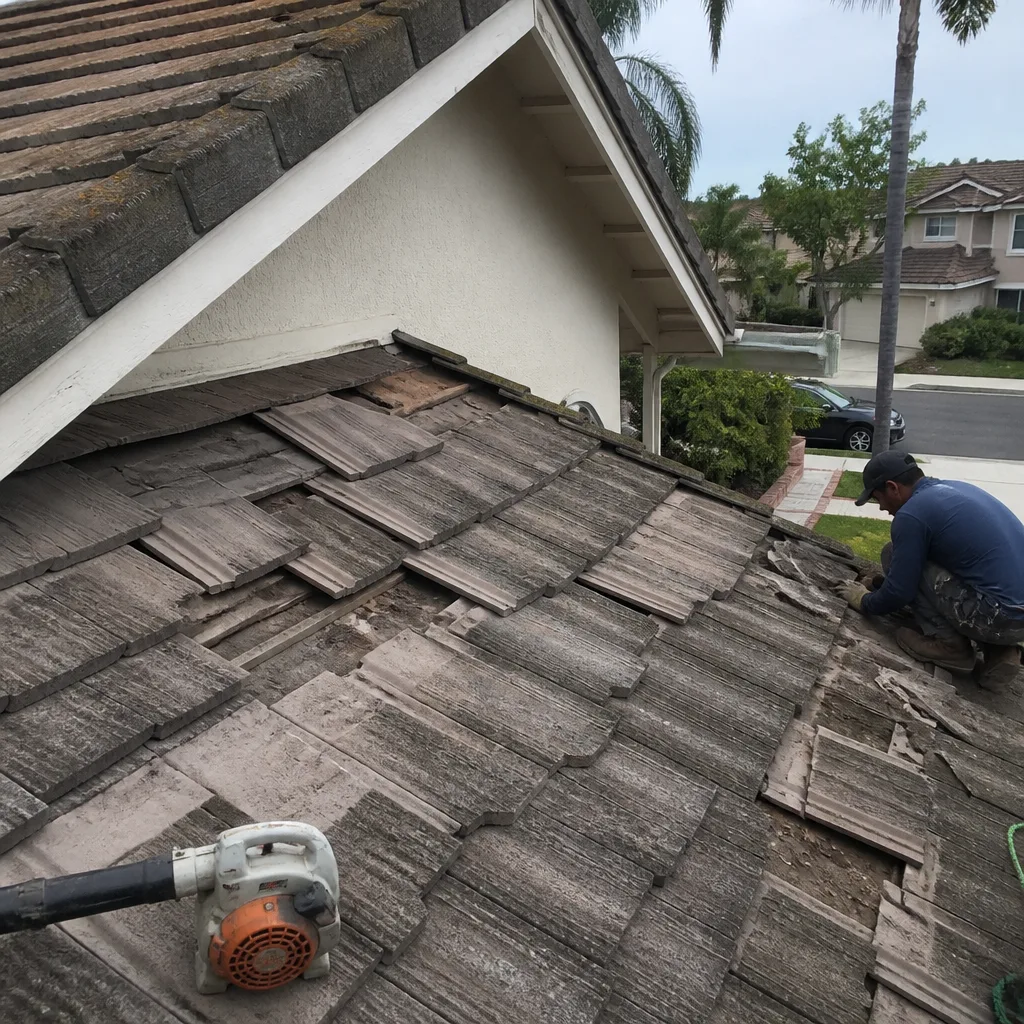
Concrete tile resists UV far better than asphalt, which is why so many Irvine homes were originally built with it. The tile itself may look fine at year 30. The problem is everything underneath. The felt or synthetic underlayment beneath those tiles is the actual waterproofing layer, and UV still reaches it through the gaps between tiles, the bird stops, and the eaves. When that underlayment dries out, it doesn’t leak immediately, it becomes brittle. Then a Santa Ana gust lifts a few tiles just enough to tear the brittle felt, and you get a leak in a roof where every tile still looks brand new. That sequence, tile looking fine while the felt fails invisibly, is the single most common misdiagnosis we encounter in Irvine.
The practical takeaway: UV exposure means inspection should focus on what’s under the visible surface, not just the surface itself. Gable Roof Repair home documents the inspection process we’ve used across hundreds of Irvine roofs, where the visual condition of tile or shingle is treated as one data point, not the diagnosis.
Santa Ana Wind Uplift: Which Edges Fail First and Why
Santa Ana winds in Irvine come from the northeast, descending through the canyons and accelerating as they compress. They don’t push against a roof evenly. They create negative pressure zones along the windward rake edge, the ridge, and the corners, and that negative pressure doesn’t push shingles down, it sucks them upward. The first failure point on most Irvine homes is the rake edge on the northeast side of the roof. The second is the ridge cap where wind accelerates over the peak. The third is any corner where two roof planes converge.
Standard nailing patterns developed for national code assume a mostly uniform wind load. Irvine’s Santa Ana events violate that assumption. A shingle nailed with four nails in the field but only two near the rake has a measurable uplift failure risk during a 60-mph gust, not because the shingle is bad but because the fastening schedule was never designed for directional canyon wind. The same applies to concrete tile: tiles at the ridge and rake need mechanical fastening or adhesive upgrades that field tiles don’t require. Flat TPO roofs face a different issue entirely; Santa Anas peel the membrane at parapet walls and at any termination where the edge detail was installed with a single line of fasteners instead of a reinforced strip.
When we evaluate an Irvine roof for wind readiness, we map the prevailing wind direction against the home’s orientation. A house that backs up to the 133 corridor or sits on a ridge in Turtle Rock gets a different repair plan than one in a sheltered Woodbridge cul-de-sac, even if both roofs are the same age. The repair is not “fix damaged shingles.” It’s “reinforce the specific edges that the wind loads first.”
The Three Materials That Dominate Irvine Roofing (and Their Real Timelines)
Irvine residential roofs fall into three main categories: concrete tile, asphalt shingle, and flat TPO on newer or contemporary homes. Each ages differently in this climate, and each has a distinct failure signature.
Concrete Tile: The 50-Year Surface, 20-Year Underlayment
A concrete tile in Irvine is startlingly durable. The tile itself may last 50 years or more. The underlayment beneath it typically lasts 18 to 25 years before UV and thermal cycling render it brittle. When it fails, the symptom is a leak with no visible exterior damage. Repairs focus on selective tile removal, underlayment replacement in affected zones, and re-setting tiles with verified fastening. A full replacement means stripping every tile, replacing the entire underlayment, and reinstalling the existing tile if it’s sound, a process that’s often cheaper than a new tile roof because the most expensive component is reused.
Asphalt Shingle: Granule Loss at Year 10, Curling at Year 15
Architectural shingles in Irvine begin showing measurable granule loss around year 8 to 10. By year 15, edge curling is common on south-facing and west-facing slopes that catch the most afternoon sun. By year 18 to 20, the shingle has often lost enough flexibility that a simple repair, lifting a shingle to replace a pipe boot or nail a lifted edge, can crack the surrounding shingles. This is the point where repair frequency starts exceeding the cost of replacement. We work with GAF and CertainTeed products most often on Irvine shingle repairs because their color lines and granule blends match the existing roofs in many of the city’s planned communities, which matters when you’re patching one slope rather than replacing the whole roof.
Flat TPO: Seam Failure Before Membrane Failure
TPO membrane on Irvine flat roofs tends to fail at seams and flashings before the broader membrane degrades. Heat-welded seams that were installed at marginally low temperatures can fail inside five years in this climate, even though the membrane itself carries a 20-year warranty. The UV load also oxidizes the membrane surface, making future repairs more difficult because new TPO doesn’t weld well to oxidized old TPO. For flat sections on homes in areas like the Great Park neighborhoods, the realistic repair windows are: seam repairs at year 5 to 8, flashing repairs at year 8 to 12, and membrane replacement between year 15 and 20.
Material selection across these categories spans value to premium tiers from seven manufacturers we’re certified to install, including Owen Corning and IKO alongside the two mentioned above. The right choice depends on the existing roof’s profile, the home’s orientation, and the homeowner’s horizon for living in the property.
The Counterintuitive Failure: Dried-Out Underlayment Cracks Before Shingles Show Wear
National roofing advice teaches homeowners to watch for missing granules, cracked tiles, and curling shingles. That advice is built for climates where precipitation does the damage. Irvine’s mild average rainfall, about 13 inches a year, means water rarely has time to saturate and rot roofing materials. Instead, the damage comes from desiccation. The sun bakes moisture out of underlayment, felt, and sealants day after day, year after year. Eventually the material loses the elasticity needed to flex with thermal movement, and it cracks under routine expansion and contraction that it used to absorb without complaint.
This creates a diagnostic trap. A homeowner sees shingles that look, from the ground, entirely serviceable. They skip the inspection. Then the driest component under those shingles cracks during the first rain of the season, and water finds a path that has nothing to do with what the roof looks like from the street. The failure was invisible and predictable.
This is why we offer roof inspection as a standalone service, not bundled into a sales pitch. The inspection looks for the failure the surface doesn’t show: delamination of the underlayment at the eaves, brittleness at penetration flashings, sealant shrinkage around vents and skylights. Roof Replacement in Stanton covers the full scope of what replacement looks like when repair is no longer the right call.
How to Stage Repairs by Zone So Every Dollar Hits the Highest-Probability Leak First
Not every roof problem deserves equal urgency. A thoughtful Irvine repair plan works through the roof by leak probability, not by what’s most visible. Here’s the sequence we follow, and it’s the same logic a homeowner can use to evaluate any repair proposal:
- Penetrations first. Pipe boots, vents, skylights, and HVAC curbs are the highest-probability leak points on any Irvine roof. They concentrate thermal movement around a rigid object, and the sealants around them degrade fastest under UV. A $300 pipe boot replacement fixes a leak that would otherwise soak the ceiling below.
- Perimeter edges second. Rake edges, ridge caps, and eaves see the most wind uplift and the most direct sun. Reinforcing these edges is cheaper than waiting for wind to tear a section loose, which turns a $800 edge repair into a $4,000 water intrusion claim.
- Field repairs third. Damaged shingles or cracked tiles in the open field of the roof matter, but a single cracked tile over a solid underlayment is a lower immediate risk than a failed pipe boot. Field repairs should be batched: replacing one shingle costs more per shingle than replacing twelve at once because mobilization is the fixed cost.
- Transition zones last. Where a tile roof meets a flat TPO section, or where a slope changes angle, the flashing detail is a chronic leak source. These repairs are often the most expensive per linear foot, so they’re staged after the higher-probability, lower-cost items are addressed.
This sequence is why we lead with “Inspection first, recommendation second.” You can’t stage repairs correctly without knowing which zone is actually compromised, and guessing costs money in both wrong repairs and continued leaks.
Irvine Building Permit Thresholds: Repair vs. Replacement and How to Document Work
Irvine follows the California Building Code with local amendments. The practical line is simple: replacing like-for-like materials in a limited area is maintenance and doesn’t require a permit. Replacing the entire roof covering, changing the roof system type, or altering the underlying structure does require a permit and an inspection.
What that means in practice:
- Replacing up to 10% of the roof area with matching materials is generally repair work, no permit required.
- Replacing more than 10% but less than 50% may trigger a permit depending on the specific scope and the inspector’s interpretation; Irvine historically leans toward requiring permits when the underlayment is replaced across more than a quarter of the roof.
- Full roof replacement always requires a permit, including a roof sheathing inspection before new underlayment goes down.
- Changing material types, like converting from shingle to tile or from tile to TPO, requires a permit and often structural verification because tile is significantly heavier than shingle.
Documentation matters because roof work without a clean permit record becomes a title defect when the home is sold. Buyers and their inspectors ask for permit history, and an unpermitted replacement can stall a sale or force a price concession. For repair work under the permit threshold, keep the contractor’s invoice, photos of the work at each stage, and a written scope of work. That paper trail establishes that the work was maintenance, not a hidden replacement.
We pull permits on every replacement and handle the inspection scheduling. For repair work that falls under the threshold, we document it as thoroughly as permitted work because the paper trail protects the homeowner’s resale value. This is one of the practical reasons we describe our standard as “Seven brands, one standard of installation”; the installation standard includes the paperwork, not just the fastening schedule.
What Roof Repair Actually Costs in Irvine: Line-Item Pricing by Repair Type
Irvine repair pricing runs higher than the Inland Empire and lower than coastal Laguna or Newport, reflecting labor availability and the city’s mix of building types. Here’s a realistic breakdown of what we quote for common repair scopes in Irvine:
| Repair Type | Typical Range | What’s Included |
|---|---|---|
| Pipe boot replacement | $300 – $550 | Remove old boot, inspect flashing, install new boot, seal |
| Single cracked tile replacement | $250 – $450 | Remove tile, inspect underlayment, set new or matching tile |
| Shingle repair (10-15 shingles) | $400 – $700 | Remove damaged shingles, replace with color-matched product |
| Ridge cap reinforcement | $700 – $1,400 | Remove existing cap, inspect fastening, reinstall with adhesive and mechanical fix |
| Rake edge fastening upgrade | $900 – $1,800 | Lift edge shingles, add fasteners per wind zone requirements, reseal |
| TPO seam repair (per 10 linear feet) | $350 – $650 | Clean oxidized membrane, patch or re-weld seam, test |
| Underlayment repair (tile roof, per 100 sq ft) | $1,500 – $3,500 | Remove tile, replace underlayment, reinstall existing tile, refasten |
| Skylight flashing repair | $500 – $950 | Remove old flashing, inspect curb, install new flashing, seal |
These ranges reflect Irvine-specific labor rates and the specific challenge of matching existing materials in older planned communities. The price difference between the low and high end usually comes down to access: a two-story tile roof in Northwood with a steep pitch costs more per square foot of repair than a single-story shingle roof in El Camino Real. We provide written line-item quotes on every repair so you can see exactly where the money goes before any work starts.
Will the price change once work starts?
For repair work, the price should not change unless the repair exposes hidden damage that could not have been seen from the surface. The most common version of this in Irvine: removing a cracked tile reveals failed underlayment beneath it, and the repair scope expands from one tile to a section of underlayment. In our quotes, we spell out what happens if conditions beneath the surface differ from the visible diagnosis, with a defined add-on price per square foot of underlayment replacement, so there’s no open-ended cost. A repair contractor who won’t commit to that structure is one who plans to use change orders as a revenue stream. For guidance on vetting contractors, see How to Hire a Roofing Contractor in Irvine: A Step-by-Step Guide.
Common Mistakes to Avoid
- Sealing over cracks with caulk or roof cement as a permanent fix. Sealant is a temporary bridge, not a repair. Under Irvine’s UV load, most consumer-grade sealants fail within 12 to 18 months, and the underlying crack is still there, usually wider.
- Replacing a concrete tile roof because the tile “looks old.” Tile that’s still structurally sound is worth reusing. The underlayment is the part that fails, and replacing only the underlayment while re-setting existing tile often costs 40% less than a full new tile roof.
- Ignoring the northeast rake edge after a Santa Ana event. Wind damage on the windward side doesn’t always look dramatic. Lifted shingles or tiles that snap back into place after the gust can hide broken seals and loosened fasteners that fail during the next wind event.
- Choosing a repair contractor based on the lowest bid without checking material match. A shingle patch in an Irvine planned community that doesn’t match the existing color or profile sticks out immediately and can affect resale curb value. Ask what product line the contractor plans to use for the patch and verify the match before signing.
- Replacing the roof without first separating repair scope from replacement scope. Some contractors quote replacement because it’s a larger sale. A standalone inspection that separates diagnosis from the sale, which is how we structure the Roof Inspection in Stanton service, tells you whether repair is actually viable before anyone proposes a number.
- Skipping permit documentation on a partial underlayment replacement. Even if the work technically falls under the threshold, undocumented large repairs create friction at resale. Keep the paper trail.
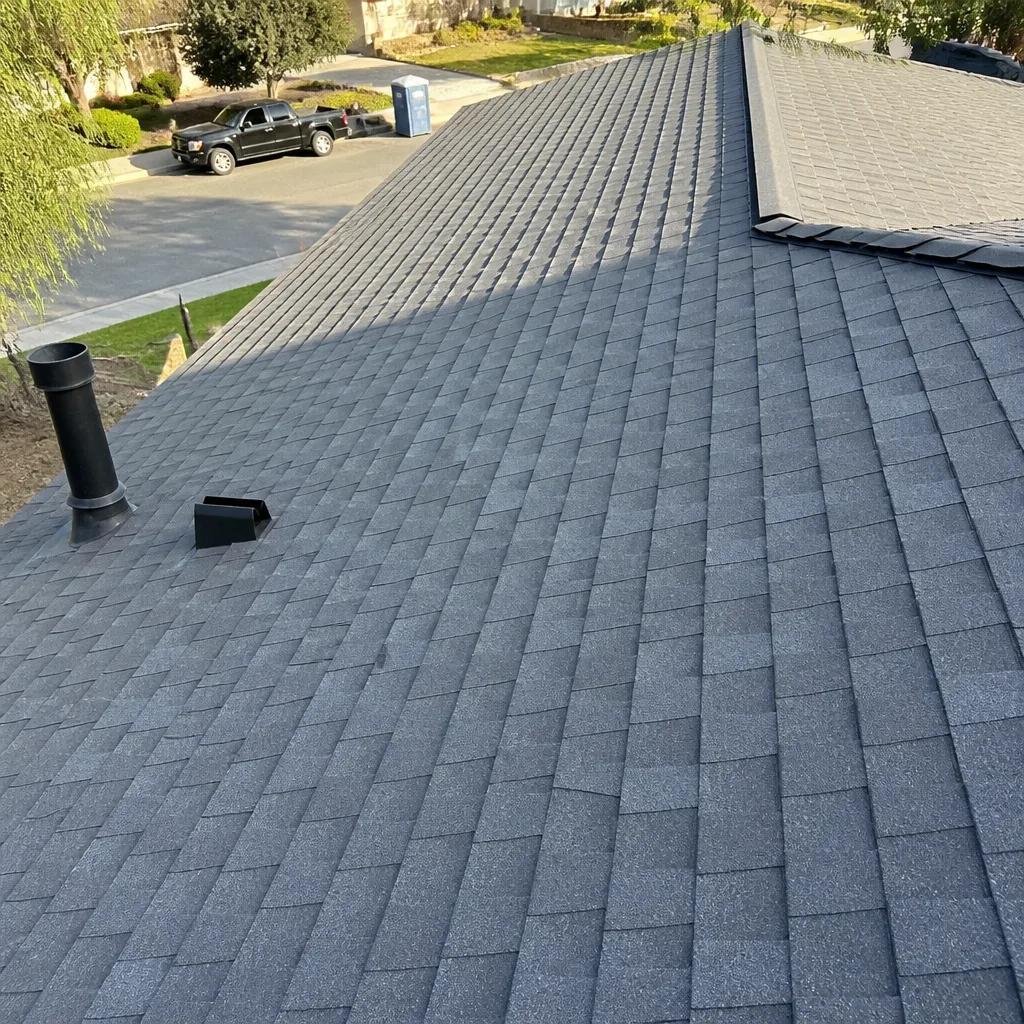
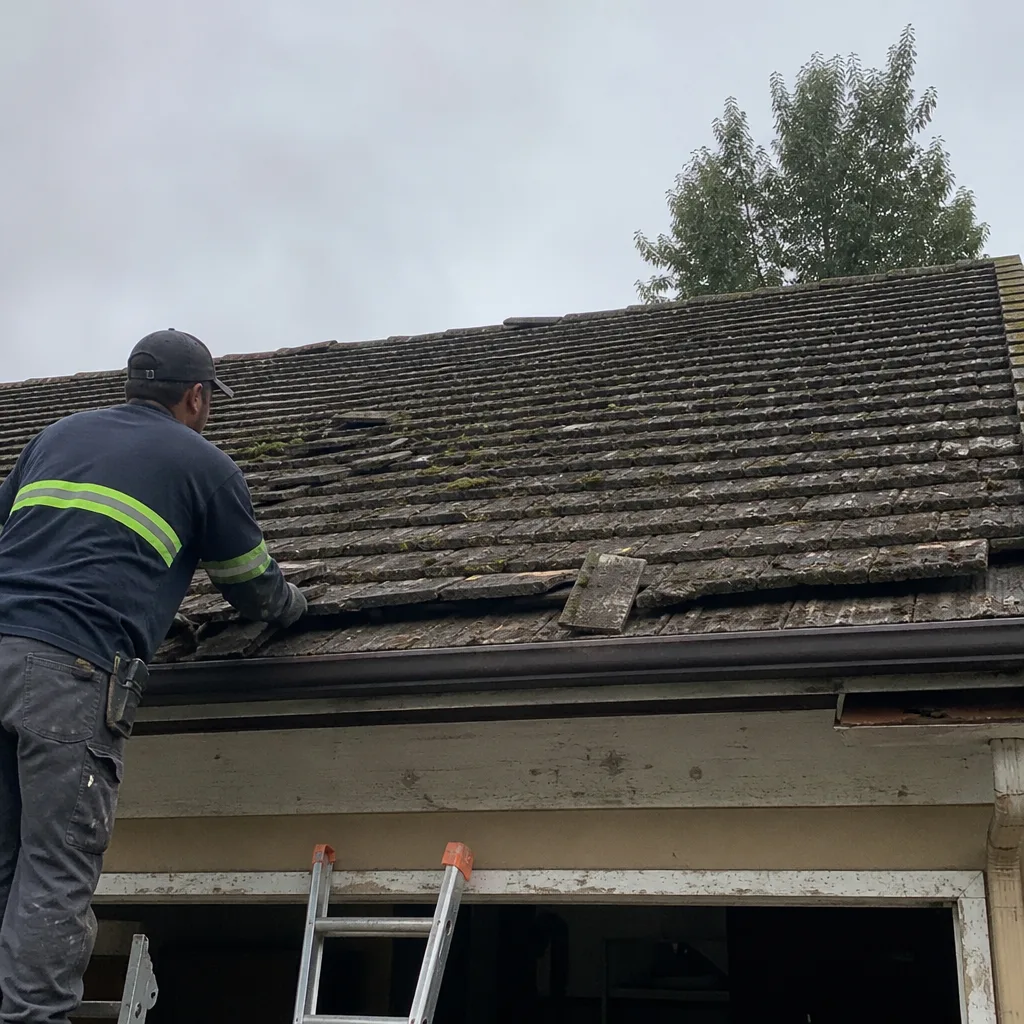
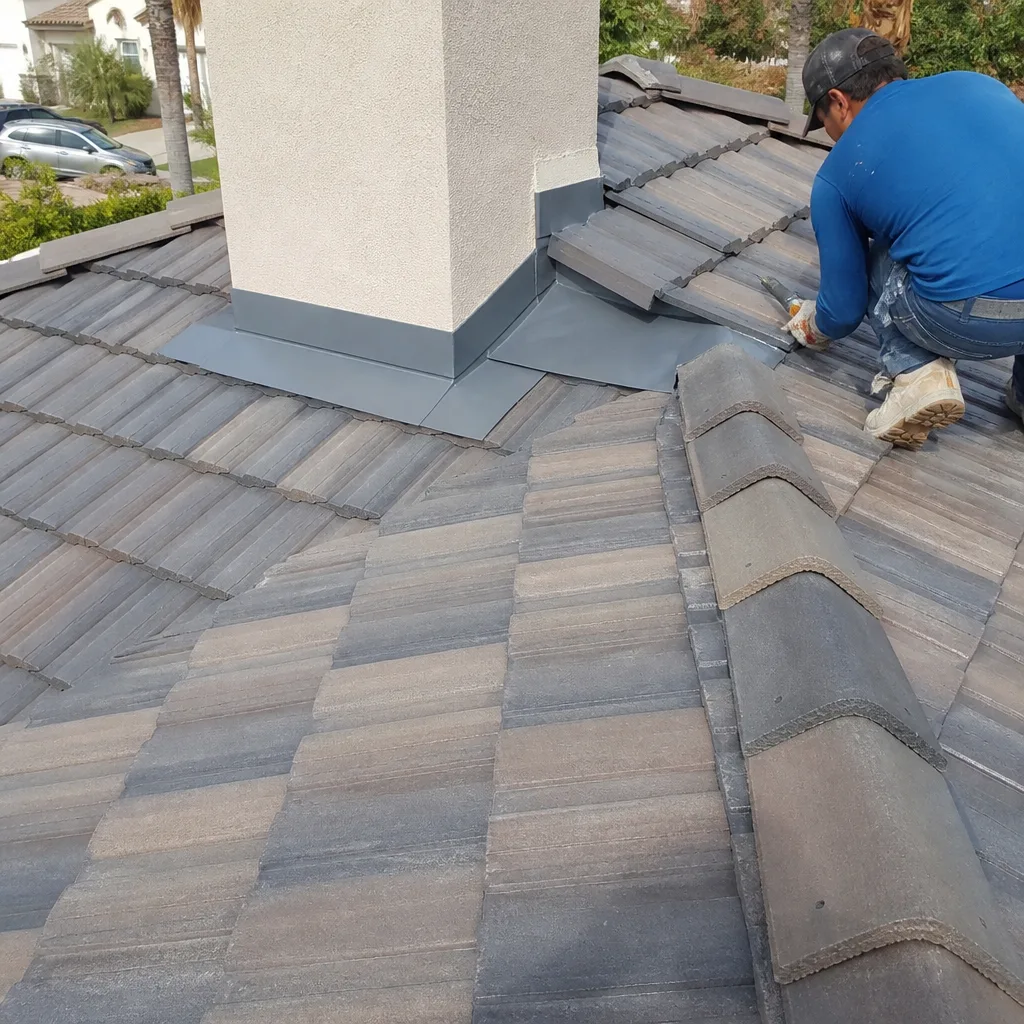
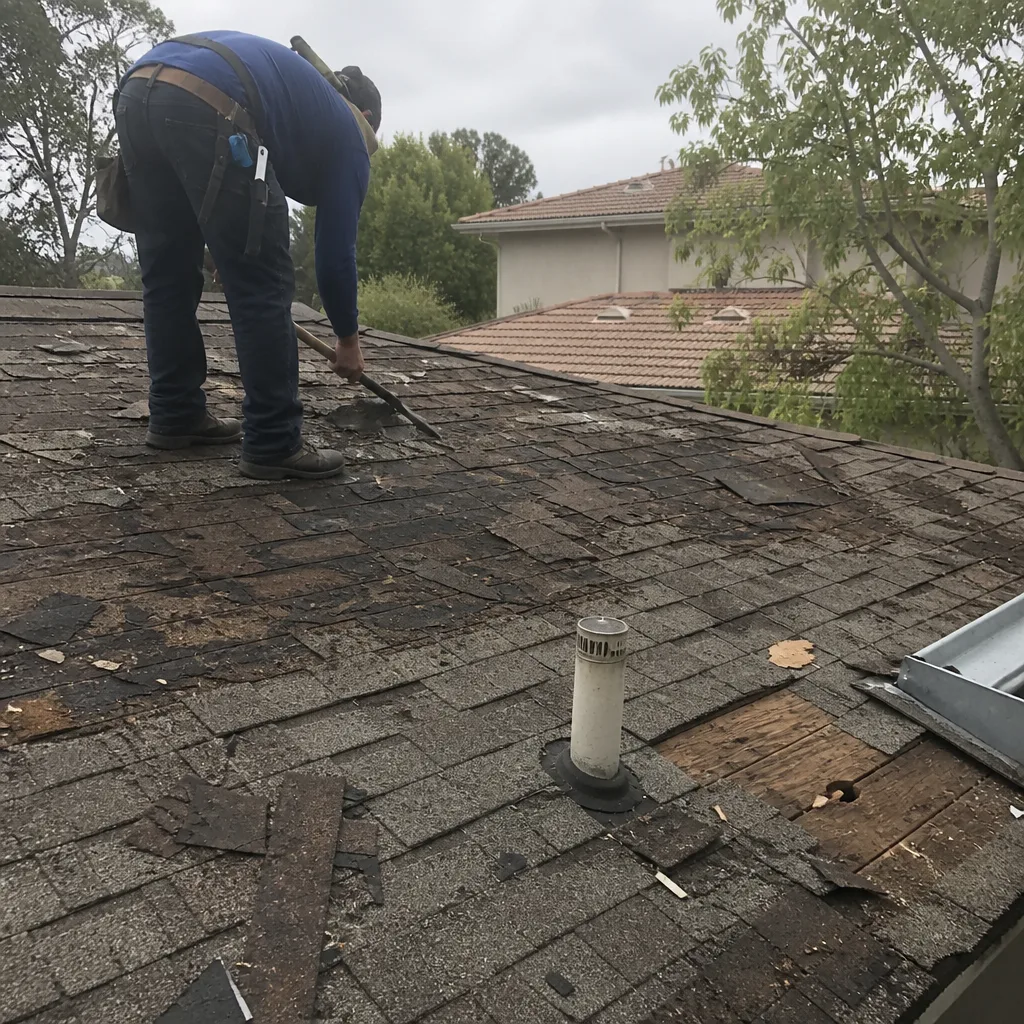
See the difference
 Before
 After
 Before
 After
 Before
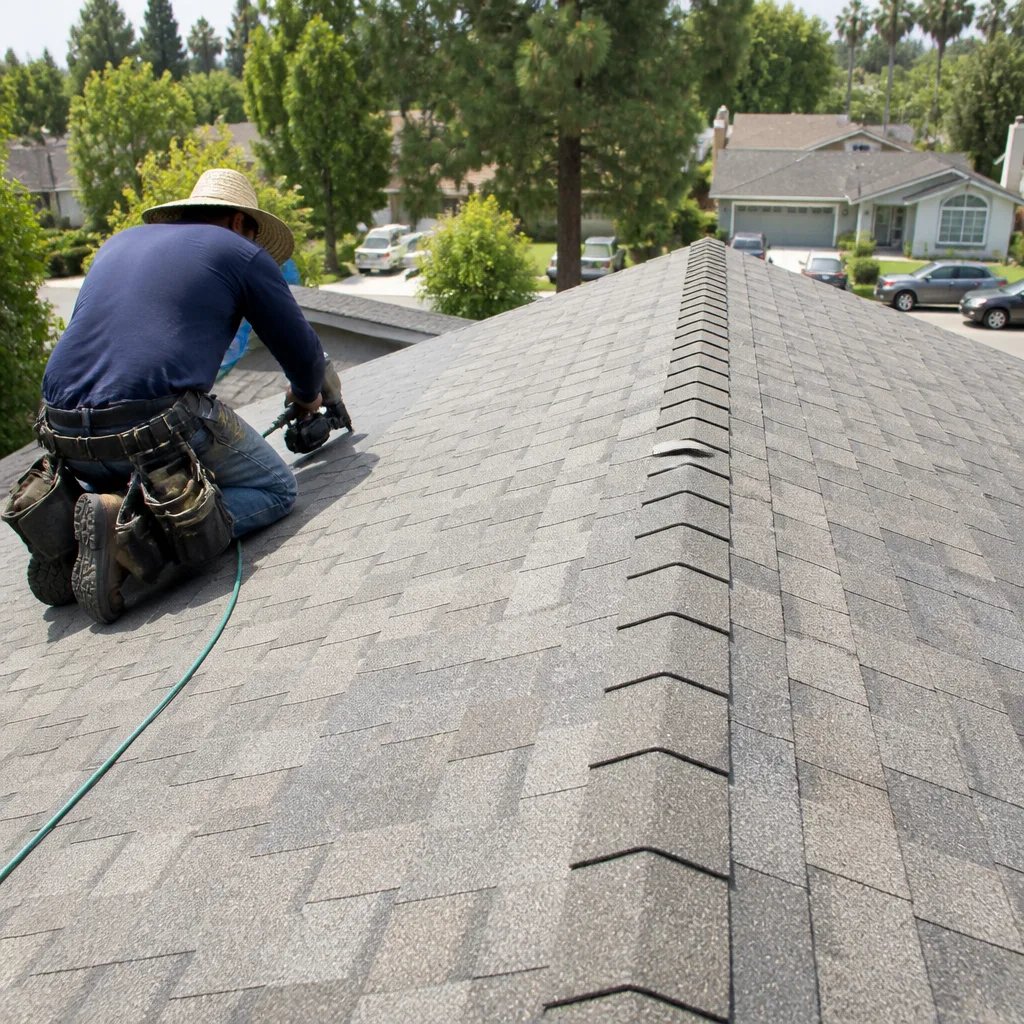 After
When to Call a Professional
Any time water stains appear on a ceiling, even a small one, the roof has already been leaking long enough to soak through the decking. Crumbling granules in the gutters after a wind event, lifted tiles at the rake or ridge, or daylight visible through the attic boards are all signs that repair is no longer a DIY proposition. Flat roof owners should call when seams begin to lift or when ponding water persists more than 48 hours after rain. Gable Roof Repair offers free estimates in Irvine, including a documented inspection that separates diagnosis from any recommended scope. Call (866) 650-8319 to schedule one.
Frequently Asked Questions
Most Irvine roof repairs run $350 to $1,400 for localized fixes like pipe boots, cracked tiles, or small shingle patches, while larger underlayment or perimeter work typically lands between $1,500 and $6,000. The governing variables are access difficulty, material type, and whether the repair uncovers concealed damage. Call (866) 650-8319 for a free estimate with a written line-item scope.
The tile surface can last 50 years or more, but the underlayment beneath it usually reaches the end of its service life between 18 and 25 years in Irvine’s UV environment. When that underlayment fails, replacing just the underlayment and re-setting the existing tile is often the most economical path.
Repairs covering less than about 10% of the roof area with matching materials typically don’t require a permit in Irvine. Larger repairs, underlayment replacement beyond a quarter of the roof, and any full replacement do require permits and inspections. Document all work regardless of threshold.
Because the underlayment beneath the tiles is the actual waterproofing layer, and in Irvine it dries out and cracks from UV exposure long before the tile shows any visible wear. A leak with no visible tile damage is the classic signature of failed underlayment.
The rake edge on the northeast-facing side of the roof is the highest-probability wind failure point, followed by the ridge cap and any corner where two roof planes meet. These areas see the strongest negative pressure uplift during Santa Ana events and are often under-fastened relative to local wind load.
That depends on the condition of the shingles on the south and west slopes, which age fastest in Irvine. If there’s significant granule loss and edge curling, replacement usually costs less per year of remaining service than repeated repairs. A standalone inspection gives you the data to make that call without a sales agenda. For the full breakdown, see Roof Replacement in Stanton.
The Bottom Line
Irvine roofs fail in predictable, climate-specific ways, and the repair plan that works is the one that respects those patterns. UV degradation is the primary driver, working invisibly on the underlayment while surface materials still look serviceable. Santa Ana winds accelerate failure at the edges, not the field. Tile, shingle, and TPO each have distinct aging signatures that determine when repair is still cost-effective. A staged repair plan, penetrations first, perimeter second, field third, transitions last, puts every dollar against the highest-probability leak. And the decision to repair or replace should always start with an inspection that separates diagnosis from the sale. For more guides & resources on Irvine roofing, explore our blog. If you’re seeing signs of roof wear in Irvine, call Gable Roof Repair at (866) 650-8319 for a free estimate and a documented inspection that answers the question honestly, repair when it makes sense, replace when it’s right.
Written by the team at Gable Roof Repair, serving Irvine since 2016.