Last updated October 30, 2026
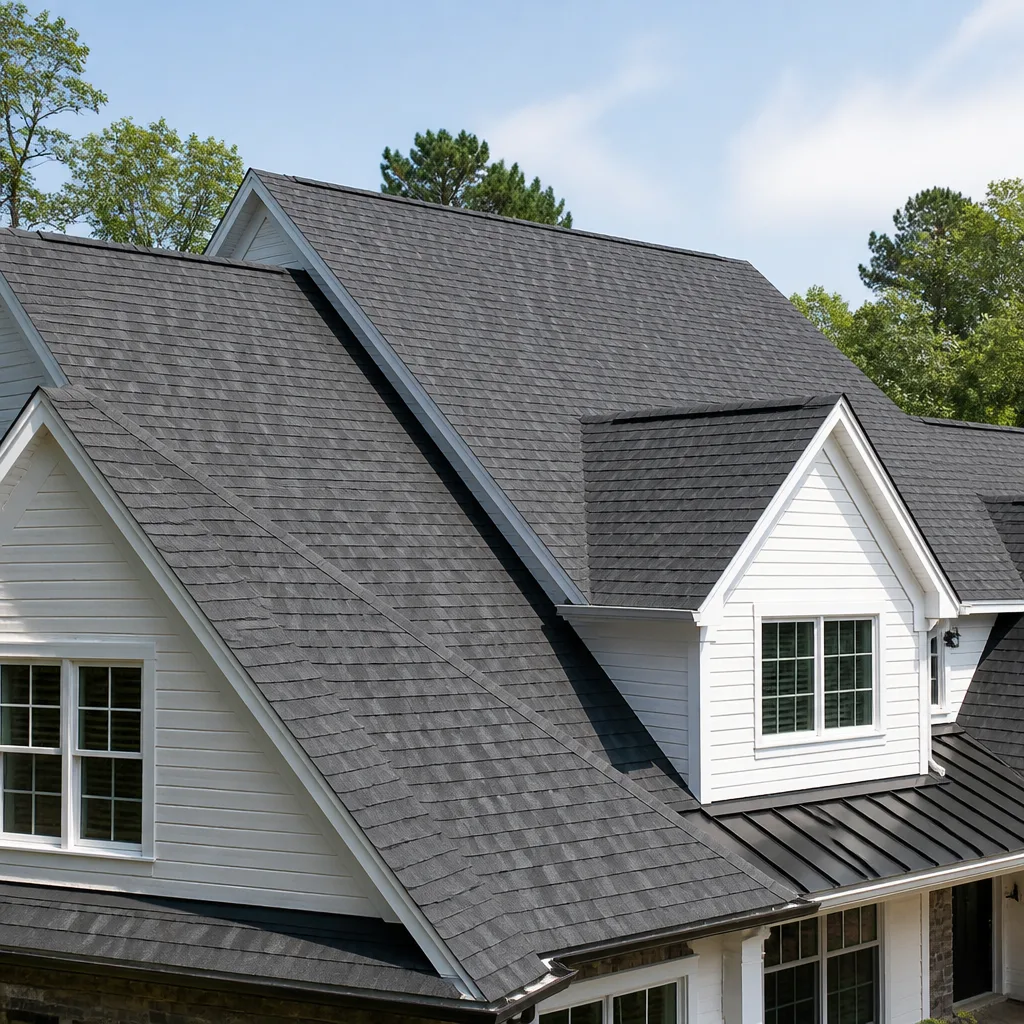 Architectural shingles
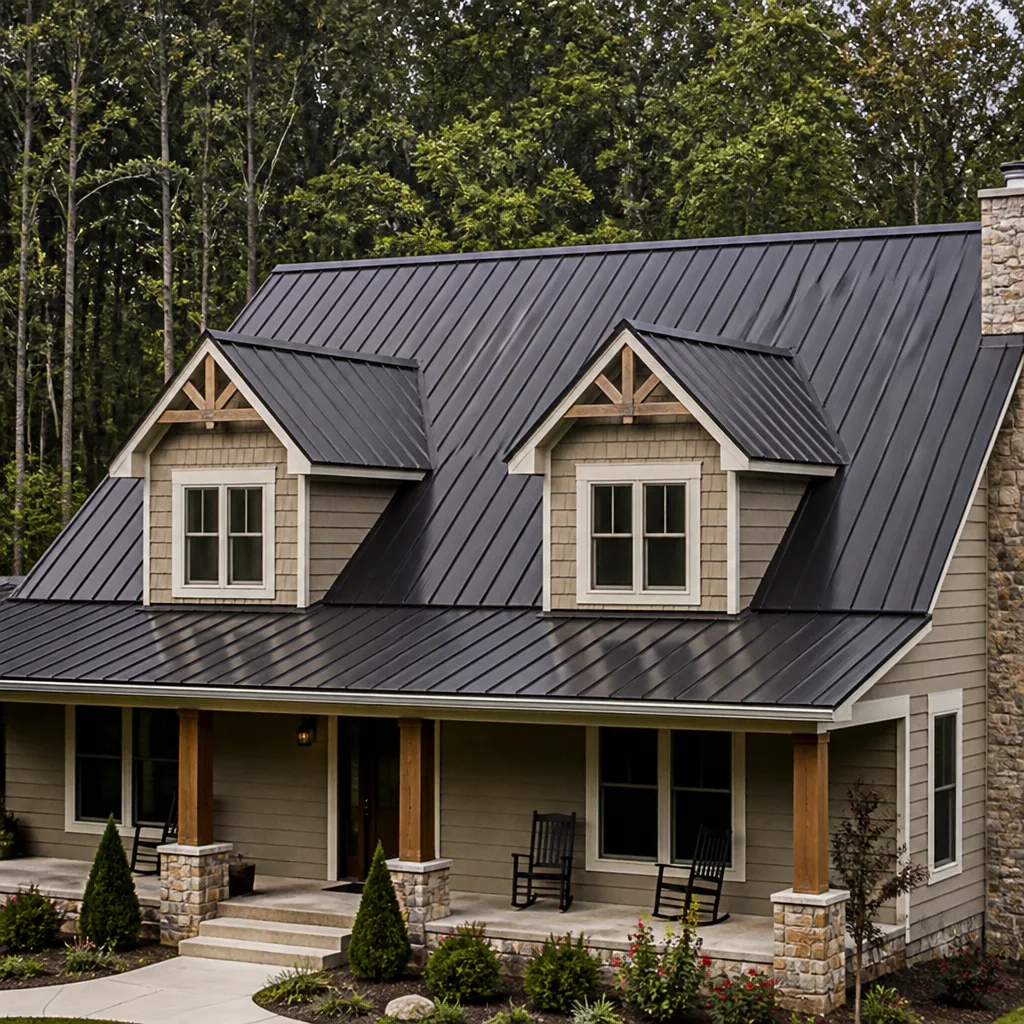 Metal roofing
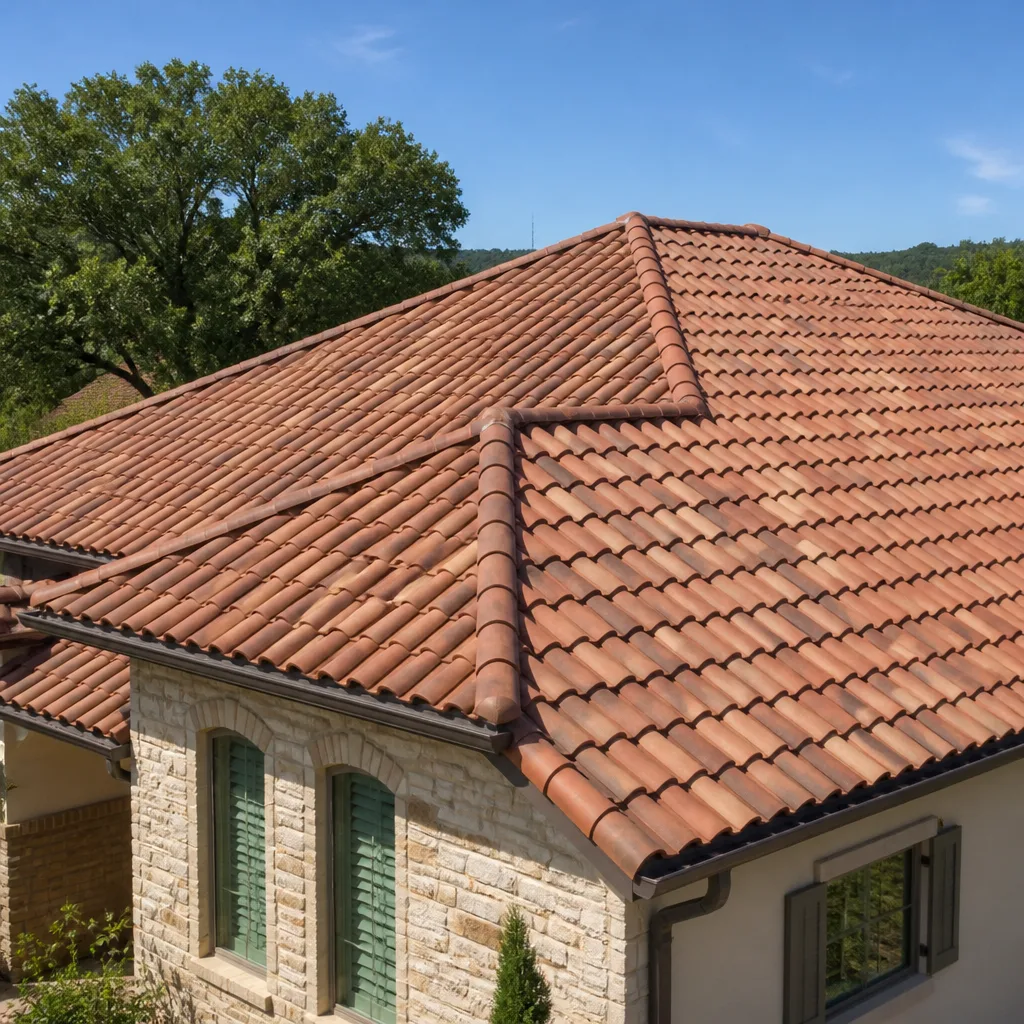 Tile roofing
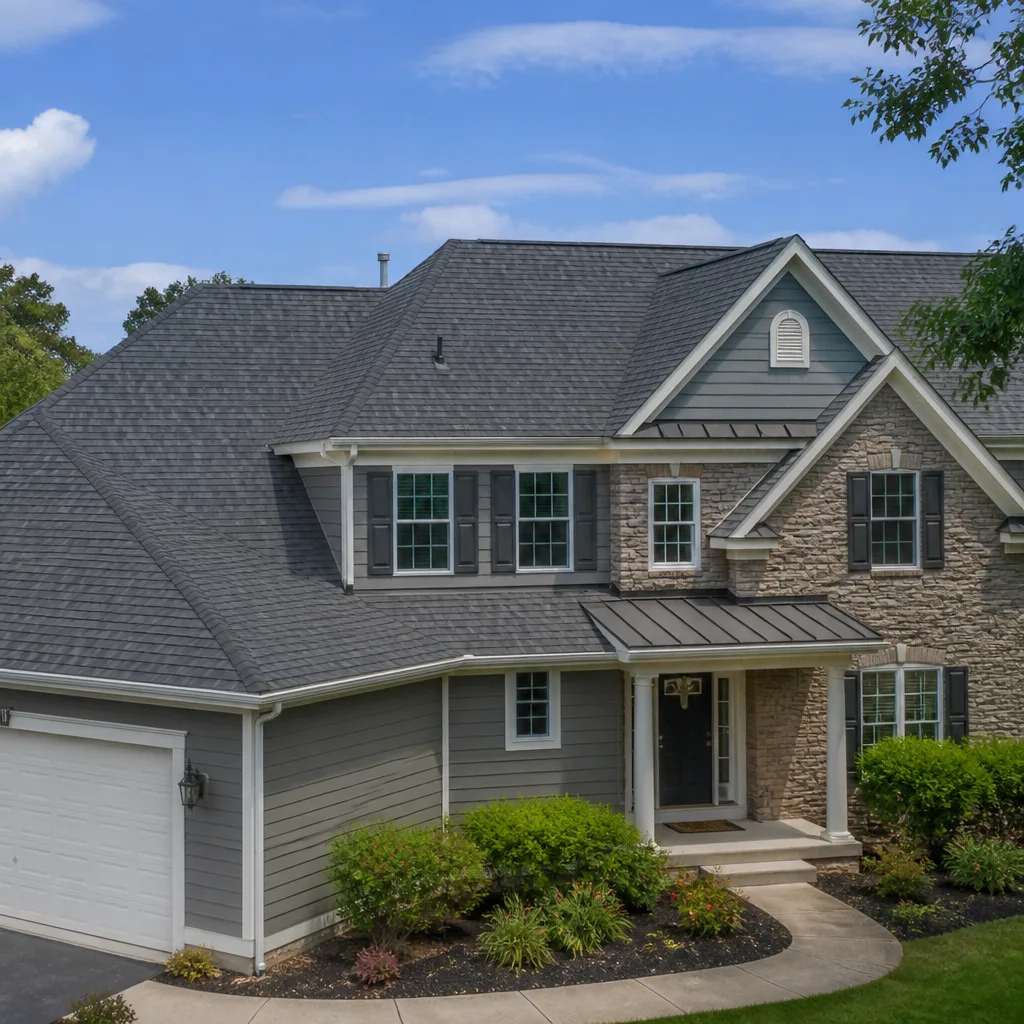 GAF
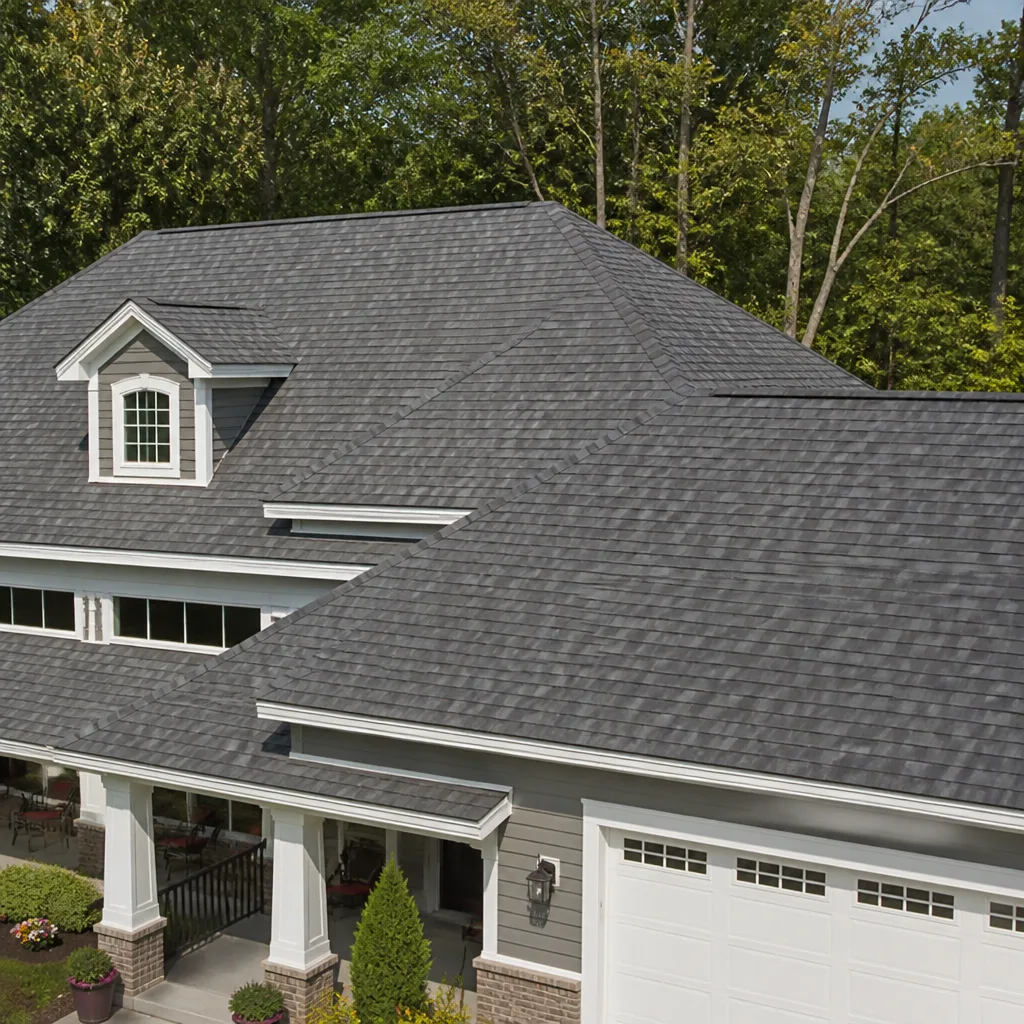 Owens Corning
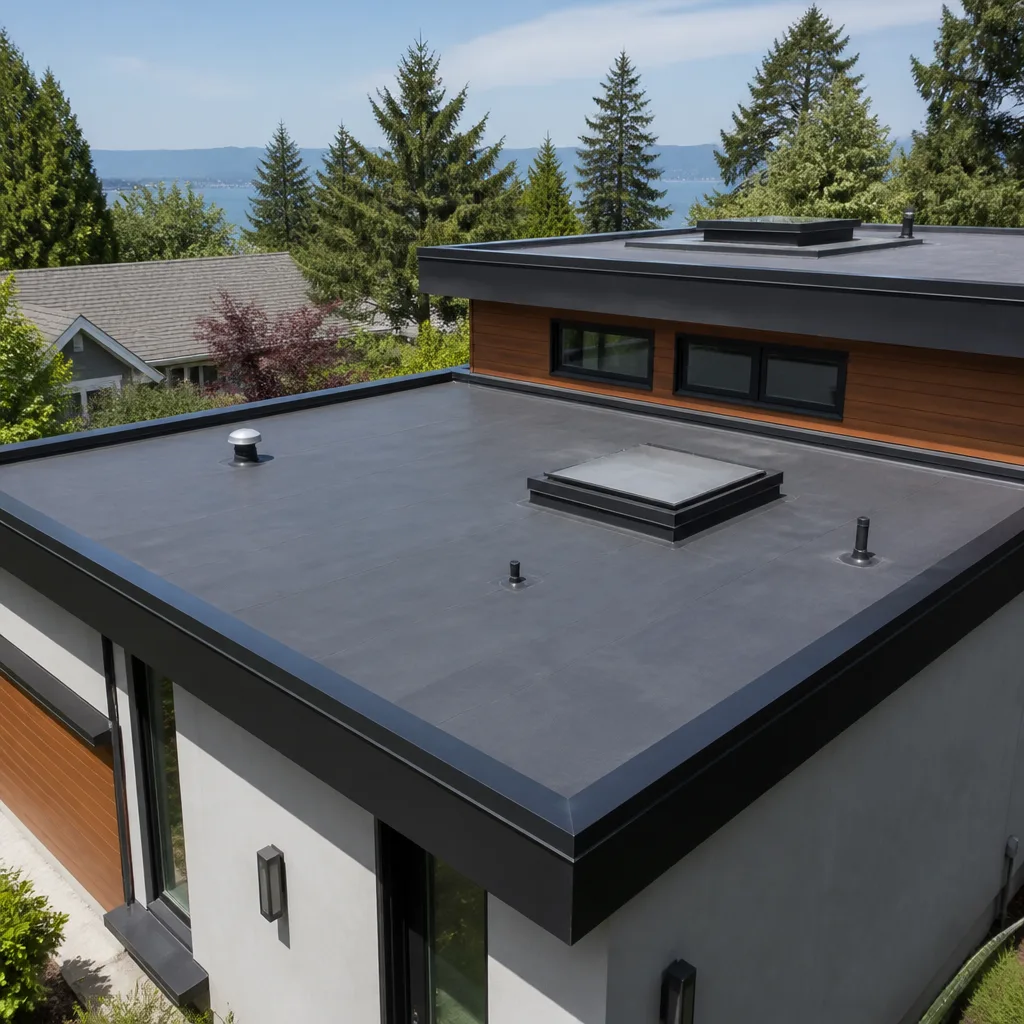 Flat & low-slope
Free roof inspection with deck photos before we talk money - GAF and Owens Corning certified installation
Roof Repair Maintenance Checklist for Irvine Homeowners
Irvine averages fewer than 15 inches of rain per year, which leads most homeowners to assume their roof is low-maintenance. That assumption is expensive. UV degradation and Santa Ana wind uplift cause more shingle failures in this city than precipitation ever does, and the damage accumulates in predictable cycles that most generic checklists completely miss. This guide covers the maintenance windows that actually matter for an Irvine roof, what to look for without getting on a ladder, and when a Roof Repair call is cheaper than waiting.
Quick Answer
A proper roof maintenance checklist for Irvine homeowners focuses on two critical windows: late October after the first Santa Ana wind event, and mid-September after the summer UV peak. During these checks, inspect ridge caps, flashing, attic ventilation, and granule accumulation in gutters. Most Irvine roofs need professional inspection every two to three years, with Roofing Cost Breakdown: The Irvine Homeowner’s Reference for 2026 showing repair costs far lower when problems are caught before water reaches the decking.
Styles & brands we work with
Table of Contents
- Why Irvine Roofs Fail Differently Than the Rest of California
- The Irvine-Specific Maintenance Calendar
- Ground-Level Inspection: What to Check Without a Ladder
- Thermal Expansion: The Fasteners, Flashings, and Ridge Caps That Fail First
- Attic Ventilation: The Maintenance Item Nobody Explains Correctly
- Granule Loss in Gutters: What It Actually Means
- HOA Tile Roofs in Irvine Villages: Catching Mortar Failure Early
- Common Mistakes to Avoid
- When to Call a Professional
- Frequently Asked Questions
Why Irvine Roofs Fail Differently Than the Rest of California
Most roofing guidance published online is written for rain-driven climates. Seattle, Portland, even the Bay Area get enough precipitation that checklist items revolve around moss, standing water, and clogged downspouts. Irvine gets roughly 12 to 14 inches of rain in a wet year and sometimes half that in a dry one. Water is not the primary enemy on your roof. Sun and wind are.
Ultraviolet radiation breaks down asphalt shingles through a process called photo-oxidation. The UV in Irvine’s cloudless summer days is intense enough to raise surface temperatures on a dark shingle roof to 150 degrees or higher. Over years, the oils that keep shingles flexible cook off. The shingle becomes brittle, curls, and eventually cracks. The failure looks like storm damage, but it was actually accumulated sun exposure making the material unable to withstand the next wind event.
Santa Ana winds add the second stressor. These offshore gusts routinely hit 40 to 60 mph in October and November, and unlike coastal winds, they come from the northeast, hitting roof slopes that rarely see strong wind from that direction. This is why ridge caps and the northeast-facing edges of roofs in Irvine show disproportionate wear. When we inspect homes in Woodbridge or Northwood after a Santa Ana event, the pattern is consistent: windward edges lift, leeward edges hold, and the damage is always worse on roofs that had pre-existing sun degradation.
The practical takeaway is this: your roof in Irvine ages from the top down, not from water up. That changes what maintenance should look like. The Gable Roof Repair home inspection process is built around this reality, not around a generic checklist written for a humid climate.
The Irvine-Specific Maintenance Calendar
Most published roof checklists suggest spring and fall inspections. For Irvine, that timing is wrong. The two windows that matter are driven by local weather events, not calendar seasons. Here is the maintenance calendar we recommend to Irvine homeowners, built around when roofs actually take damage in this city.
- Late September (post-summer UV peak): Inspect the entire roof surface for cracking, curling, or blistering shingles. Check south-facing and west-facing slopes first, since these absorb the most direct afternoon sun. This is also the right time to check attic temperatures on a hot afternoon to confirm ventilation is still working.
- Late October to early November (after the first strong Santa Ana): Check for lifted or missing shingles along the northeast-facing edges and ridge line. Walk the perimeter of the home and look for shingle tabs in the yard or on the driveway. Inspect flashing at roof penetrations, since Santa Ana winds can break aged sealant around vents and skylights.
- December through February (rain season): During the first significant rain, check the attic for active leaks and look at the ceilings beneath the roof for water staining. Irvine’s rain comes in short, intense bursts, so leaks often appear fast and then stop. Catching them during the rain is easier than finding them after.
- April through June (June Gloom moisture cycle): Check for moss or algae growth on north-facing slopes and shaded areas. Irvine’s marine layer brings consistent morning moisture to some neighborhoods, especially those closer to the 405 and the coastal plain. Moss is rare but not impossible, and when it appears it holds water against the shingle surface and accelerates degradation.
- July through August (peak heat): Limit roof activity to early morning. This window is for monitoring attic temperatures and watching for any shingles that have started to curl at the edges. Heat-related damage is progressive, so catching curling in July gives you months before the next Santa Ana season to schedule a repair.
If you follow this calendar, you are inspecting when damage is most visible and most repairable. Waiting until a leak appears means the water has already found a path through every layer of the roof system.
Ground-Level Inspection: What to Check Without a Ladder
You do not need to get on the roof to catch most early-stage problems. In fact, for Irvine homeowners, walking on a sun-baked shingle roof can cause more damage than it prevents, especially in summer when the shingles are soft enough to scuff. A thorough ground-level inspection catches most of the issues worth acting on.
Start with a slow walk around the entire perimeter of the house. On each side, look at the roof edge, the ridge line, and any roof penetrations visible from the ground. Binoculars help if the roof is steep or the eaves are high.
- Missing or misaligned shingles: Look for gaps in the shingle pattern, dark spots where a shingle used to be, or shingles that are no longer lying flat. After a Santa Ana event, look specifically at the northeast-facing slope and ridge line.
- Curling at shingle edges: This is the visible signature of UV damage. Curling usually starts at the corners of shingle tabs and progresses inward. Any curling is worth documenting, because the next wind event will likely tear those tabs off.
- Granules in the gutter or on the ground below the drip edge: Normal granule shedding is minimal and spreads out over years. Visible piles of granules under the roof edge indicate accelerated wear. We cover this in detail in the granule loss section below.
- Flashing gaps at chimneys, skylights, and vents: Look for sealant that has pulled away from the metal, rust streaks on the flashing itself, or signs that the flashing is no longer seated tight against the roof surface.
- Sagging ridge line: Stand back far enough to see the ridge line against the sky. Any dip or wave in the ridge usually indicates decking damage beneath, often from water intrusion that started long before it became a visible leak.
- Debris accumulation at roof-to-wall intersections: In Irvine’s drier months, leaves and fine dust can build up in valleys and behind chimneys. When rain finally comes, that debris holds water against the shingles and flashing long after the rain stops.
If the ground-level inspection turns up anything you cannot explain, that is the point where a professional roof inspection makes sense. Roof Inspection in Stanton follows the same protocol we use in Irvine, and the value of a standalone inspection is that nobody is pressuring you into a repair or replacement before you understand what is actually wrong.
Thermal Expansion: The Fasteners, Flashings, and Ridge Caps That Fail First
Irvine’s temperature range is deceptive. Summer afternoons routinely hit 90 degrees or higher on the roof surface, and winter nights can drop into the 40s. That is a 50-degree swing, day to night in summer and season to season across the year. Every material on your roof expands and contracts with those swings, and the materials do not all move at the same rate.
Metal expands more than asphalt. Asphalt expands more than tile. This differential movement is what eventually breaks the seals and fasteners that hold a roof system together. The components most vulnerable to thermal fatigue in Irvine are specific and predictable.
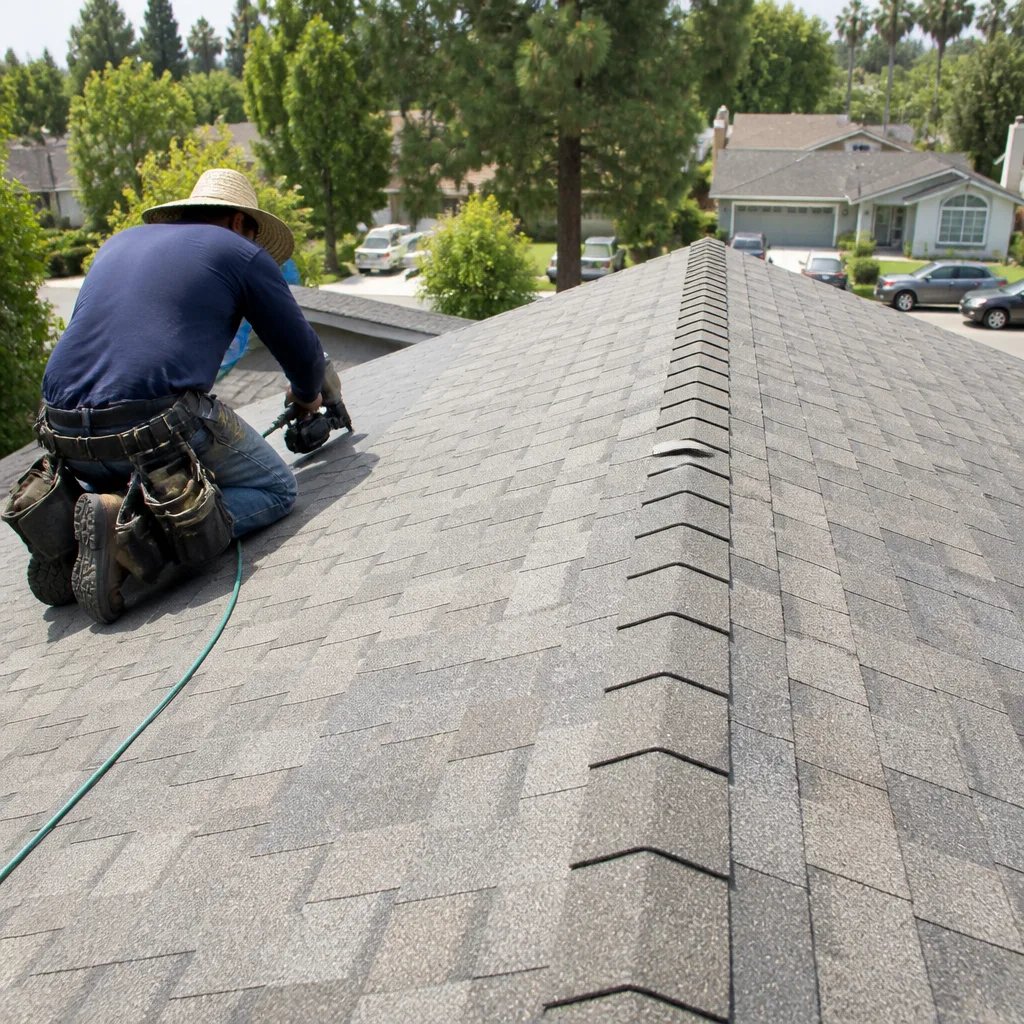
Ridge caps are the most common failure point we see in Irvine. Ridge caps sit at the highest point of the roof, which means they absorb the most direct solar radiation and experience the widest temperature swings. The sealant holding each ridge cap shingle flexes with every cycle, and eventually it cracks. Once the sealant at a ridge cap fails, the wind has a direct path to lift the cap. After one Santa Ana season, a failed ridge cap can leave a gap that lets rain into the attic along the entire ridge line.
Flashing at penetrations fails next. The chimney flashing, the plumbing vent collars, the skylight bases, and the furnace vent flashing all move differently than the shingles around them. In Irvine, the sealant at these transitions needs to be checked at least every two years. Most homeowners never look at these until a leak starts, but the sealant degrades visibly long before water intrusion begins.
Nails and fasteners are the third failure point. Thermal cycling eventually works nails loose from the decking, a process called nail pop. When a nail pops, the shingle above it is no longer fully secured. The shingle can then slide or lift in the next wind event. Nail pops can sometimes be spotted from the ground as small bumps under the shingle surface, but they are much easier to spot during a hands-on inspection.
The maintenance item for all of these components is visual, not repair. You are looking for separation, cracking sealant, and movement. Repairing failed sealant around a ridge cap costs a small fraction of what it costs to fix the decking damage that follows if the cap lifts and water gets in during the next rain. The math always favors catching these early.
Attic Ventilation: The Maintenance Item Nobody Explains Correctly
Attic ventilation is the single most important maintenance item for shingle longevity in Irvine, and it is also the one that most generic checklists get completely wrong. The purpose of attic ventilation is not to cool the house. It is to keep the roof deck and the underside of the shingles from cooking.
Here is what happens in an unventilated or under-ventilated Irvine attic. In summer, the attic temperature climbs to 140 degrees or more. That heat radiates up through the decking and cooks the shingles from below. The shingles now face heat from two directions: direct sun on top and trapped attic heat below. This is why roofs in Irvine with poor ventilation show premature granule loss and curling years earlier than well-ventilated roofs on identical houses.
Ventilation also matters in winter, but for a different reason. When Irvine gets cold nights and humid mornings during the June Gloom cycle or winter rain season, moisture in the house migrates up into the attic. Without adequate airflow, that moisture condenses on the underside of the decking. The decking then holds moisture, which accelerates rot and eventually causes the shingles above to fail from below.
The correct check is simple and does not require getting on the roof.
- On a hot afternoon, open the attic access and stand inside for a minute. If the temperature feels dramatically hotter than the outside air, the attic is not ventilating properly.
- Check for visible vents at the eaves and along the ridge or gable ends. Irvine homes need both intake vents low on the roof and exhaust vents high on the roof. One without the other does not work.
- Look for blocked soffit vents from the outside. In homes with blown-in insulation, the insulation can settle into the eaves and block the intake vents entirely.
- Check the underside of the roof decking for dark staining or fuzzy black spots. These indicate moisture problems that ventilation should have prevented.
If your attic fails any of these checks, the fix is usually straightforward: add or clear vents, or install a correctly sized ridge vent. This is not a cosmetic upgrade. It is the difference between shingles that last 15 years and shingles that last 25. For Irvine homeowners, most of whom replaced or built their roofs during the housing boom years, ventilation is frequently the hidden reason roofs are failing before their stated warranty period.
Granule Loss in Gutters: What It Actually Means
Every asphalt shingle roof sheds granules. The granules are the ceramic-coated stone particles embedded in the shingle surface, and they serve two purposes: they block UV light from reaching the asphalt beneath, and they provide the shingle’s color and texture. Losing some granules over time is normal and unavoidable.
The question is what the amount and timing of granule loss tells you.
On a new roof, especially one installed in the last 12 to 18 months, a noticeable amount of granules in the gutters is expected. New shingles shed excess surface granules that were not fully embedded during manufacturing. If you recently had a roof installed with GAF or CertainTeed shingles, for example, you may see heavy granule accumulation in the first year. That is not a defect. It is the roof settling in.
On an older roof, significant granule accumulation means something different. When you run your hand through gutter debris and the water runs dark with granules, or when you see piles of granules at the end of downspout extensions, the shingles are losing their protective layer faster than is normal. This is the point where we start measuring remaining shingle life.
Here is the diagnostic sequence we use. If the shingles are 10 to 15 years old and the granule loss is localized to one slope, that slope is aging faster than the rest, usually because of solar orientation. The south-facing and west-facing slopes in Irvine always fail first. If the granule loss is uniform across all slopes, the roof is wearing evenly and the remaining life is easier to predict. If granule loss is severe on a roof under 10 years old, you may have a ventilation problem or a material defect, and both are worth investigating.
The important distinction is between shedding and failure. Shedding is gradual, uniform, and visible over years. Failure is sudden, localized, and usually accompanied by other signs like curling, cracking, or bare spots on the shingles. If you are not sure which one you are seeing, a professional inspection separates normal wear from a roof that is actually at end of life.
HOA Tile Roofs in Irvine Villages: Catching Mortar Failure Early
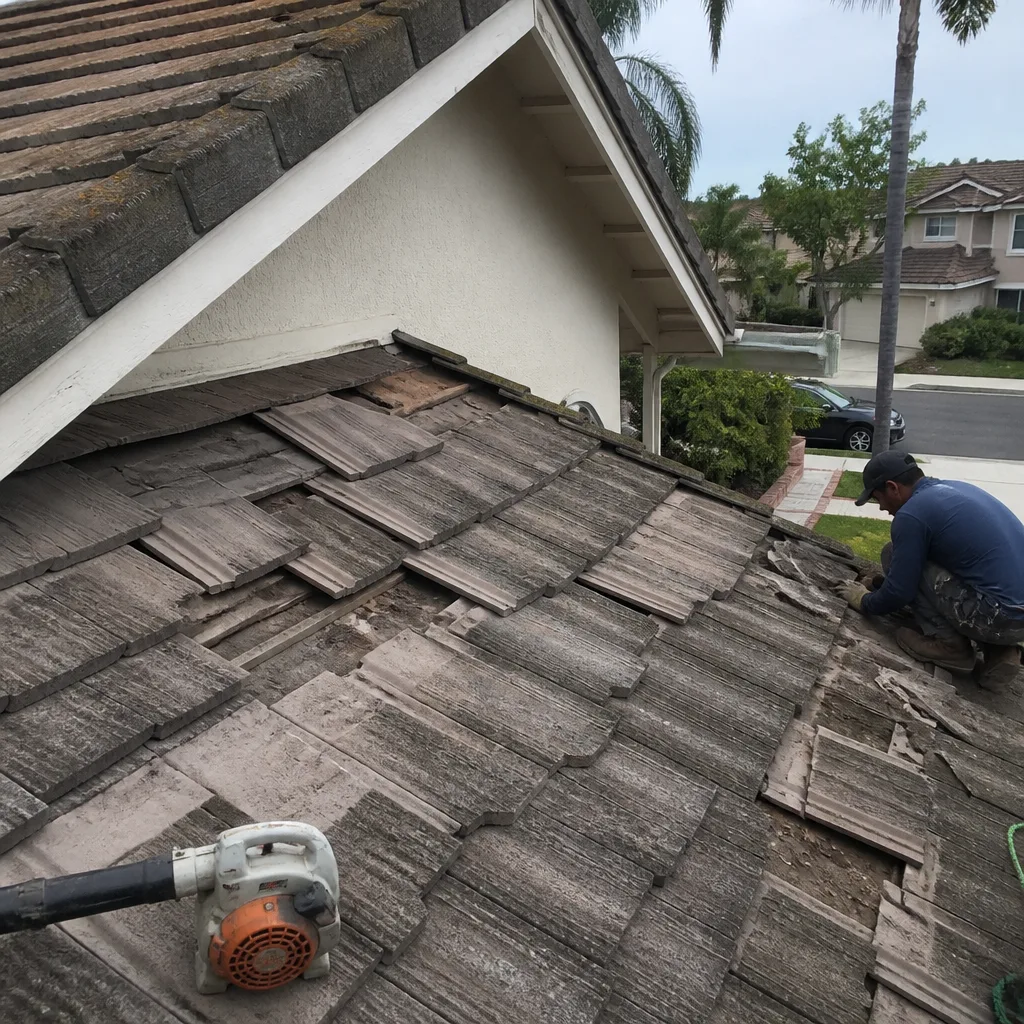
A large portion of homes in Irvine’s villages and planned communities were built with concrete or clay tile roofs, and many HOAs in the city require tile roofing to maintain community uniformity. Tile is a different system than shingle, and it has its own failure mode that most Irvine homeowners do not know to look for: mortar failure at hips and ridges.
Tile roofs are not sealed at the surface like shingle roofs. The individual tiles overlap, and the water barrier is the underlayment below the tile. At the hips and ridges, the tiles are cut to fit and the joints are filled with mortar. This mortar is the weakest point in the system. In Irvine’s thermal cycle, the mortar expands and contracts at a different rate than the tile around it. Over years, the mortar cracks, crumbles, and falls out.
The problem is that mortar failure does not immediately leak. For months or years, the compromised ridge or hip is shedding water into the roof system, and the underlayment is absorbing moisture. By the time a stain appears on the ceiling, the underlayment and possibly the decking have already been compromised.
The inspection is a ground-level one. Look at the ridge and hip lines from the ground and check for:
- Gaps where the mortar should be continuous between tiles
- Pieces of mortar on the ground below the ridge or hip lines
- Tiles at the ridge that appear shifted or no longer aligned with the tiles below
- Dark staining running down from the ridge line after rain, which indicates water has found a path through a failed mortar joint
For tile roofs in Irvine, Boral and other manufacturers produce tile systems that are well suited to the local climate, but the tile is only as good as the installation and the ongoing condition of the mortar work. Catching mortar failure early means repairing the affected joints, which is a small job. Waiting until the underlayment fails means removing tile to replace the underlayment, which is a much larger one.
Common Mistakes to Avoid
- Following a Seattle-style maintenance calendar. Spring and fall checklists are written for rain-driven climates. If you inspect an Irvine roof in March and again in October but miss the post-Santa Ana window, you will miss the damage that matters most.
- Walking on the roof during summer afternoons. Shingles are hot and soft in direct sun. Walking on them can scuff away granules and damage the roof you are trying to protect. Ground-level inspection is safer and sufficient for most checks.
- Ignoring a lifted ridge cap because it has not leaked yet. Ridge cap damage is the most common precursor to water damage we see in Irvine. The repair is inexpensive. The decking repair that follows a lift ridge cap during rain season is not.
- Assuming a newer roof does not need maintenance. New roofs shed granules and settle for the first year. More importantly, installation defects most often show up in the first two years, and catching them during the warranty period is critical.
- Pressure washing a tile roof. Pressure washing forces water up under the tile and can strip away mortar. If tiles need to be cleaned, the method matters, and high pressure is rarely the right answer for an Irvine tile roof.
- Caulking over a failed flashing joint without addressing the underlying movement. Flashing failures are usually caused by thermal movement. Caulking the visible gap without checking that the flashing is still seated correctly just hides the problem until the caulk cracks again.
- Replacing a roof without checking attic ventilation. Installing new shingles over a badly ventilated attic is a common mistake. The new roof simply wears out early for the same reason the old one did. Ventilation should be assessed at the same time as the roof.
When to Call a Professional
Some maintenance items are clearly DIY, like checking the gutters or looking for lifted shingles from the ground. Other situations warrant a professional inspection or repair. Call a roofer when you see granule loss that is heavy for the age of the roof, when a ridge cap is visibly lifted or shifted, when you find water staining in the attic that you cannot trace to a specific rain event, or when the roof is at or beyond 15 years old and has never had a professional assessment. Tile roof mortar failure also warrants professional attention, since the repair requires working at height and matching the existing tile and mortar profile. See our Roof Repair Troubleshooting: Common Problems and How to Fix Them for additional warning signs. Gable Roof Repair offers free estimates in Irvine, and if you are not sure whether what you are seeing is normal wear or the start of a failure, that is exactly what a professional inspection is for. Call (866) 650-8319 to schedule one.
Frequently Asked Questions
Roof inspection pricing in Irvine varies by scope and roof type, with standalone inspections typically ranging from free with a repair estimate to several hundred dollars for a full attic-to-surface assessment. Gable Roof Repair offers inspection as a standalone service, so the diagnosis is not bundled into a sales pitch. Call (866) 650-8319 for current inspection pricing in Irvine.
For most Irvine homes, a professional roof inspection every two to three years is sufficient, with additional checks after major Santa Ana wind events or if you notice granule accumulation, curling shingles, or water staining. Older roofs and HOA tile roofs may benefit from annual checks. The cost of an inspection is consistently lower than the cost of catching a failure late.
Yes. Santa Ana winds regularly exceed 40 mph in Irvine, and they hit roofs from the northeast, which is a direction many roof slopes are not designed to handle as their primary windward face. The wind tears off shingles and ridge caps that have already been weakened by UV exposure, which is why the post-Santa Ana inspection window matters so much.
No single brand dominates in Irvine’s specific UV and thermal conditions. The installation quality, attic ventilation, and roof orientation matter more than the brand name. We work with materials from GAF, CertainTeed, Owens Corning, IKO, Atlas, Tamko, and Boral so that the recommendation fits the roof and the budget, not a single manufacturer’s product line.
Most roof repairs in Irvine do not require a building permit, as long as the work does not involve structural changes or a full replacement of the roof system. When a permit is required for a larger job, a licensed contractor handles the submittal. Always confirm permit requirements with your contractor before work begins.
You can catch most early-stage problems from the ground using the perimeter walk and the checklists in this guide. The key areas to watch are the ridge line, the roof edges, the flashing at penetrations, and the gutters for granule accumulation. A professional inspection adds the attic check and a close-up assessment of the components that ground-level viewing cannot fully reveal.
Roof repair costs in Irvine depend heavily on the scope of the repair and the type of roof, but small repairs like resealing a ridge cap or repairing a flashing joint are consistently in the low hundreds, while larger repairs involving decking replacement or tile repair run higher. Roof Repair in Stanton and Irvine follow similar pricing patterns, and the best way to get an accurate number is a free estimate. Call (866) 650-8319 and we will give you a written line-item quote before any work is scheduled.
The Bottom Line
An Irvine roof fails from sun and wind before it fails from rain. The maintenance calendar that protects it is built around the city’s actual weather events: the summer UV peak, the Santa Ana season, the June Gloom moisture cycle, and the occasional winter downpour. Ground-level inspection catches most problems early, the attic ventilation check protects shingle life over the long term, and granule accumulation tells you where the roof is in its lifespan. For HOA tile roofs, the watch item is mortar at hips and ridges. When in doubt, get a professional opinion before a small repair becomes a large one. For more guides & resources on protecting your roof, visit our blog. Gable Roof Repair offers free estimates in Irvine. Call (866) 650-8319 to schedule yours.
Written by the team at Gable Roof Repair, serving Irvine since 2016.
See the difference
 Before
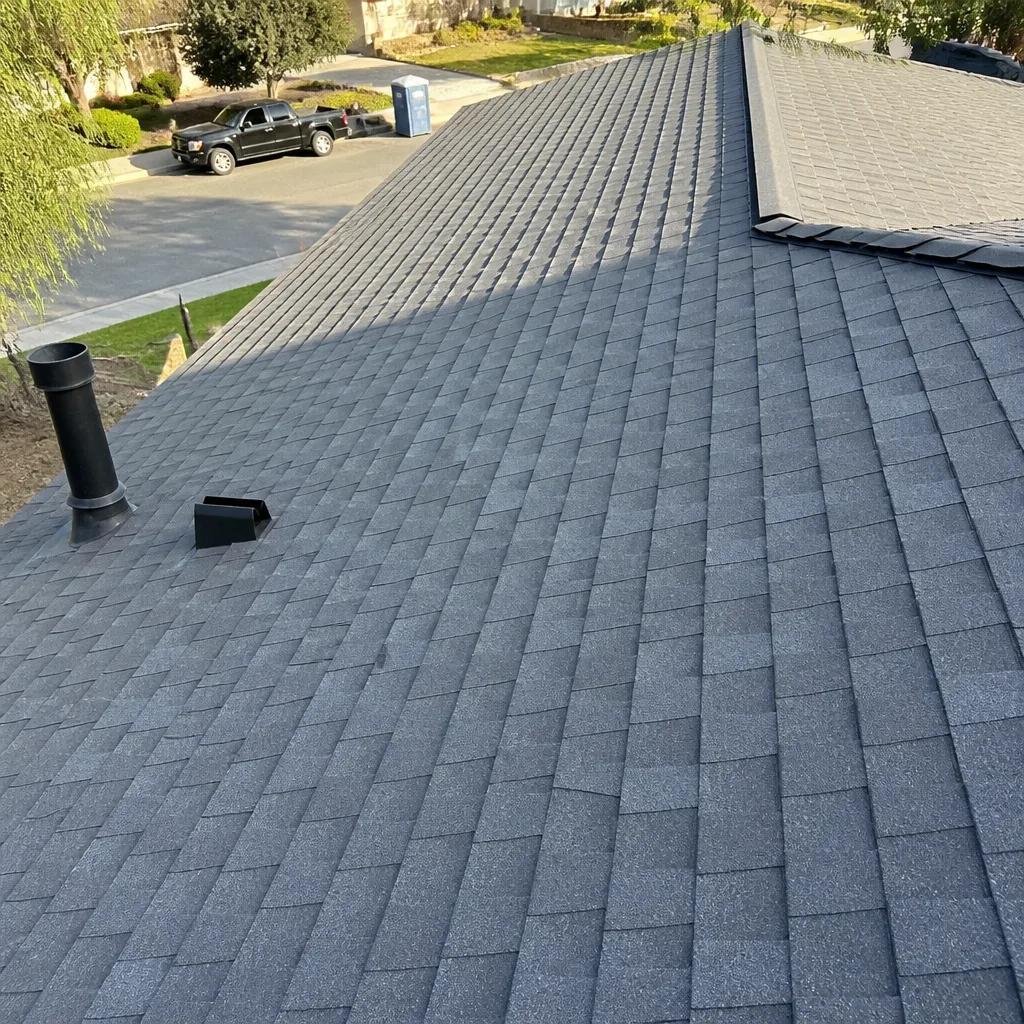 After
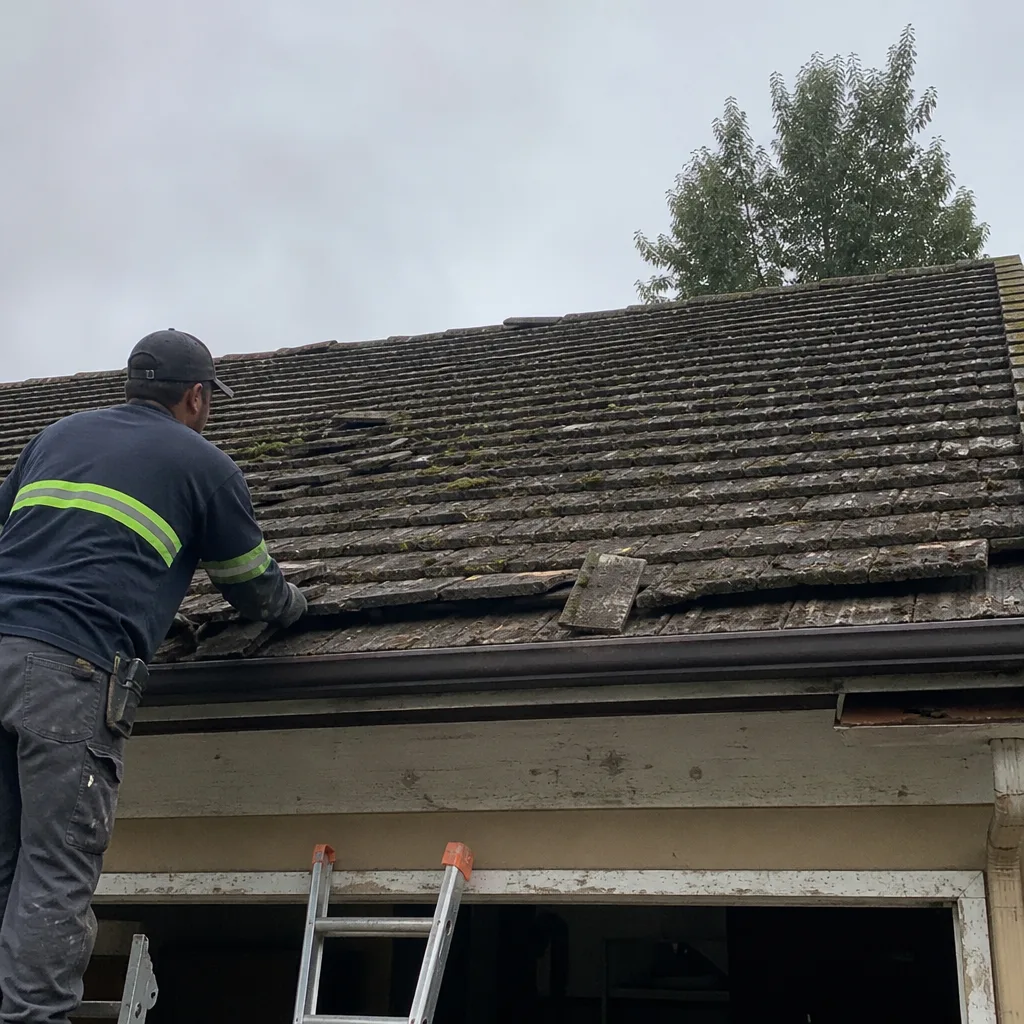 Before
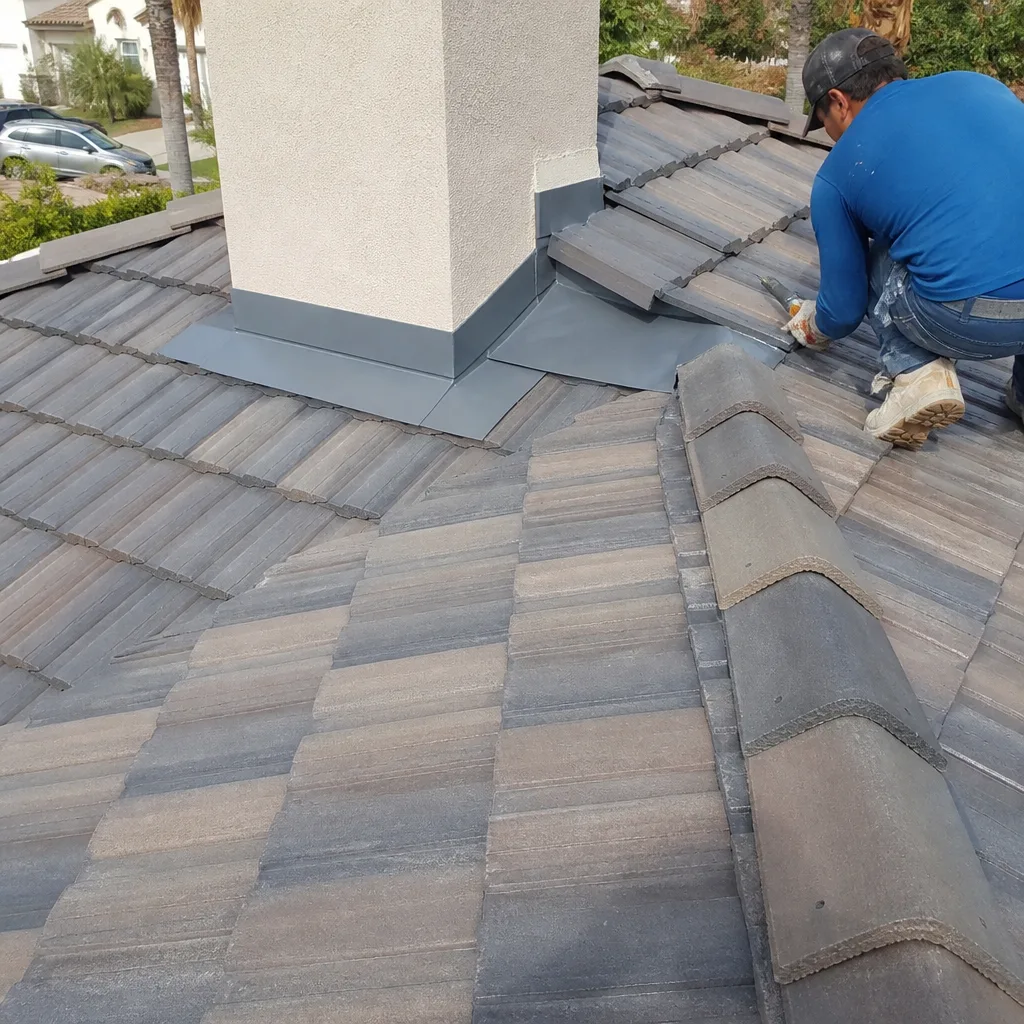 After
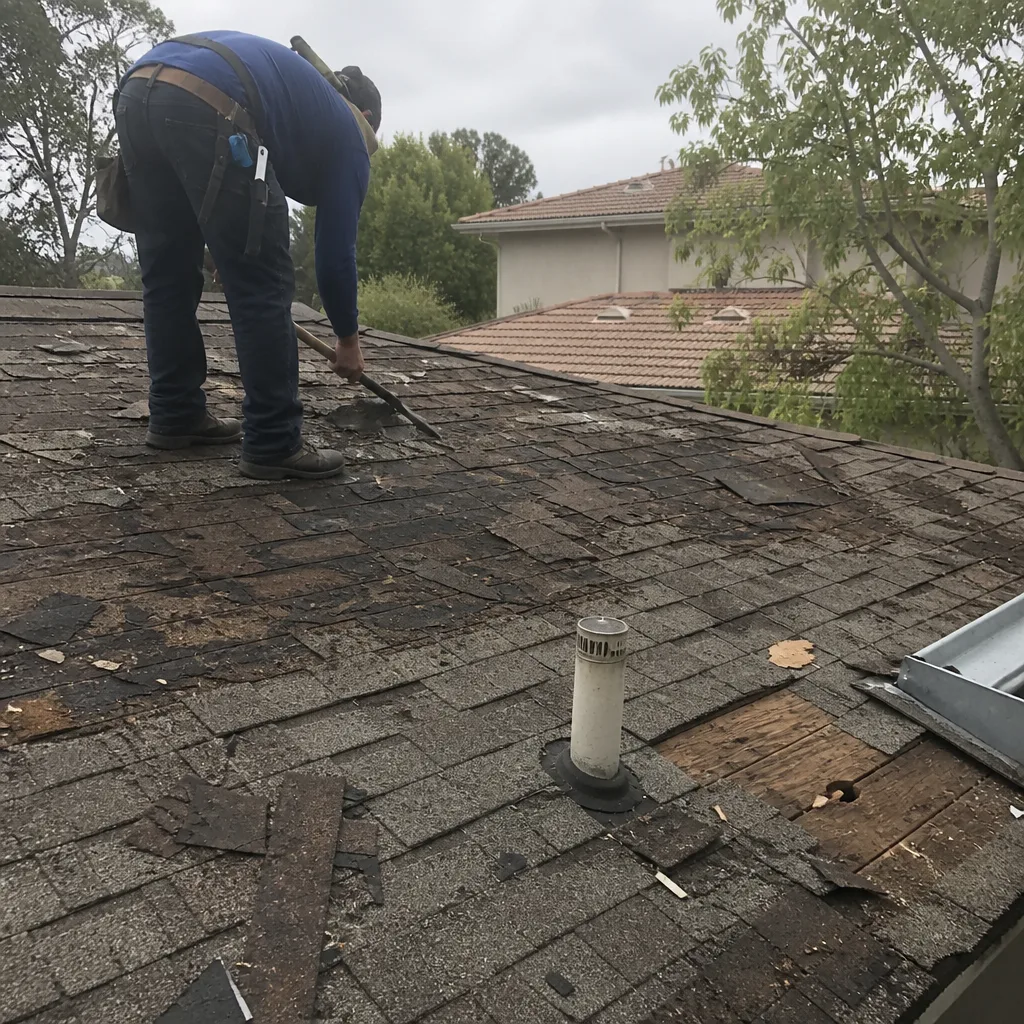 Before
 After